AI Product Recommendations: Get Your Shopify Store Ready
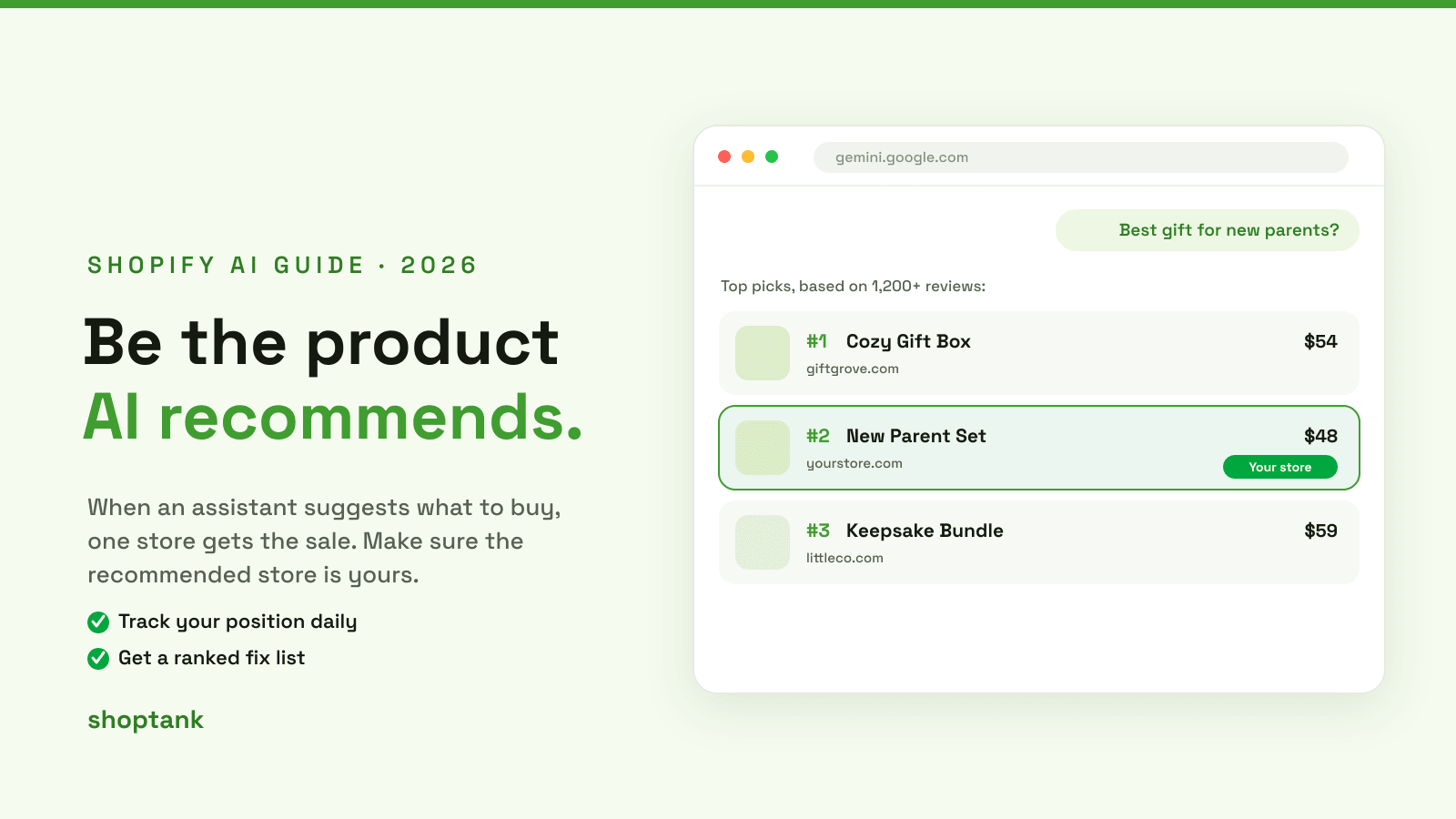
Most Shopify stores aren't losing AI product recommendations because their products are bad. They're losing because AI systems can't reliably parse what they sell, where they ship, what it costs, or whether the store looks trustworthy enough to mention.
That's the counterintuitive part. AI product recommendations are already a major commercial category, not an edge experiment. A 2024 market analysis projected the AI-driven personalized recommendations market would grow from USD 1.84 billion in 2024 to USD 24.8 billion by 2034, with a 29.7% CAGR, and the Product Recommendations segment already held more than 32.5% of that market in 2024 (Market.us market analysis). If you're still treating recommendation readiness as a nice-to-have app setting, you're playing with the wrong map.
For Shopify founders, the practical question isn't "How do AI recommendations work?" It's "What does my store need so an AI assistant can confidently include my products in a recommendation?" That's a merchant-side data problem. And most stores aren't solving it.
Table of Contents
- Why Your Store Is Invisible to AI Shopping Assistants
- Commercial Value of AI Recommendations
- The Data AI Crawlers Need to Recommend You
- How to Implement AI-Ready Data on Shopify
- Testing and Monitoring Your AI Visibility
- Common Pitfalls and Optimization Best Practices
Why Your Store Is Invisible to AI Shopping Assistants
Google's old game was page ranking. The new game is machine-readable brand understanding.
When a shopper asks ChatGPT, Gemini, Claude, Copilot, or Perplexity for a product suggestion, the system isn't behaving like a classic search engine that sends traffic to the ten blue links. It tries to synthesize an answer from the brands, products, policies, and attributes it can interpret with confidence. If your Shopify store exposes weak structure, thin product context, or incomplete policy data, you don't just rank lower. You often vanish from consideration.
That shift is why many merchants feel confused. Their SEO may be solid. Their paid traffic may convert. Their product pages may look polished. Yet they still don't appear when buyers ask AI tools what to buy.
Practical rule: AI assistants don't recommend the prettiest storefront. They recommend the stores they can understand.
A simple scenario makes this obvious. A customer asks an AI assistant for a travel backpack that fits carry-on rules, ships quickly, and has a clear return policy. Your product page may mention those details in scattered blocks, theme tabs, or app-generated snippets. But if that information isn't exposed in structured, current, machine-readable form, the assistant can skip you and mention a competitor with cleaner data.
This is closely tied to the broader shift in search behavior that ButterflAI outlines in its explainer on Search Generative Experience. The core takeaway for merchants is simple: visibility now depends less on webpage ranking alone and more on whether AI systems can compile reliable facts about your business.
If you're trying to understand how this applies specifically to Shopify catalog inclusion, this guide on getting your Shopify store listed in ChatGPT shopping results is a useful companion. It shows why listing isn't automatic just because your products are live.
The old SEO assumptions break fast
Several habits from traditional ecommerce SEO don't transfer well:
- Homepage-first thinking: AI tools often need product-level and policy-level facts, not just brand-level authority.
- Pretty copy over clear structure: Clever merchandising language helps humans. Machines need explicit attributes.
- Set-and-forget feeds: Catalog data changes constantly. Stale availability or price data undermines recommendation confidence.
- Traffic as the only KPI: In AI discovery, inclusion and mention quality matter before the click even happens.
What invisibility really means
For a Shopify founder, invisibility isn't abstract. It means:
- Your products aren't shortlisted when a buyer asks for options in your category.
- Competitors get cited instead because their shipping, pricing, and return details are easier to parse.
- Your brand story gets flattened into generic category language because the AI has no strong signal for what makes you distinct.
This is why AI product recommendations deserve operational attention, not just curiosity. The issue isn't whether assistants exist. It's whether your store gives them enough reliable inputs to use you in the first place.
Commercial Value of AI Recommendations
AI product recommendations are not just a conversion-rate tactic. For a Shopify founder, they affect margin, repeat purchase behavior, and whether your catalog gets considered at all by AI-driven buying flows.
A lot of ecommerce advice stops at the shopper experience. That misses the merchant-side opportunity. Recommendation systems reward stores that publish usable product data, clean policies, and current availability. Stores that do this well get more than better onsite merchandising. They get more chances to be surfaced across search, assistants, retention channels, and guided shopping environments.
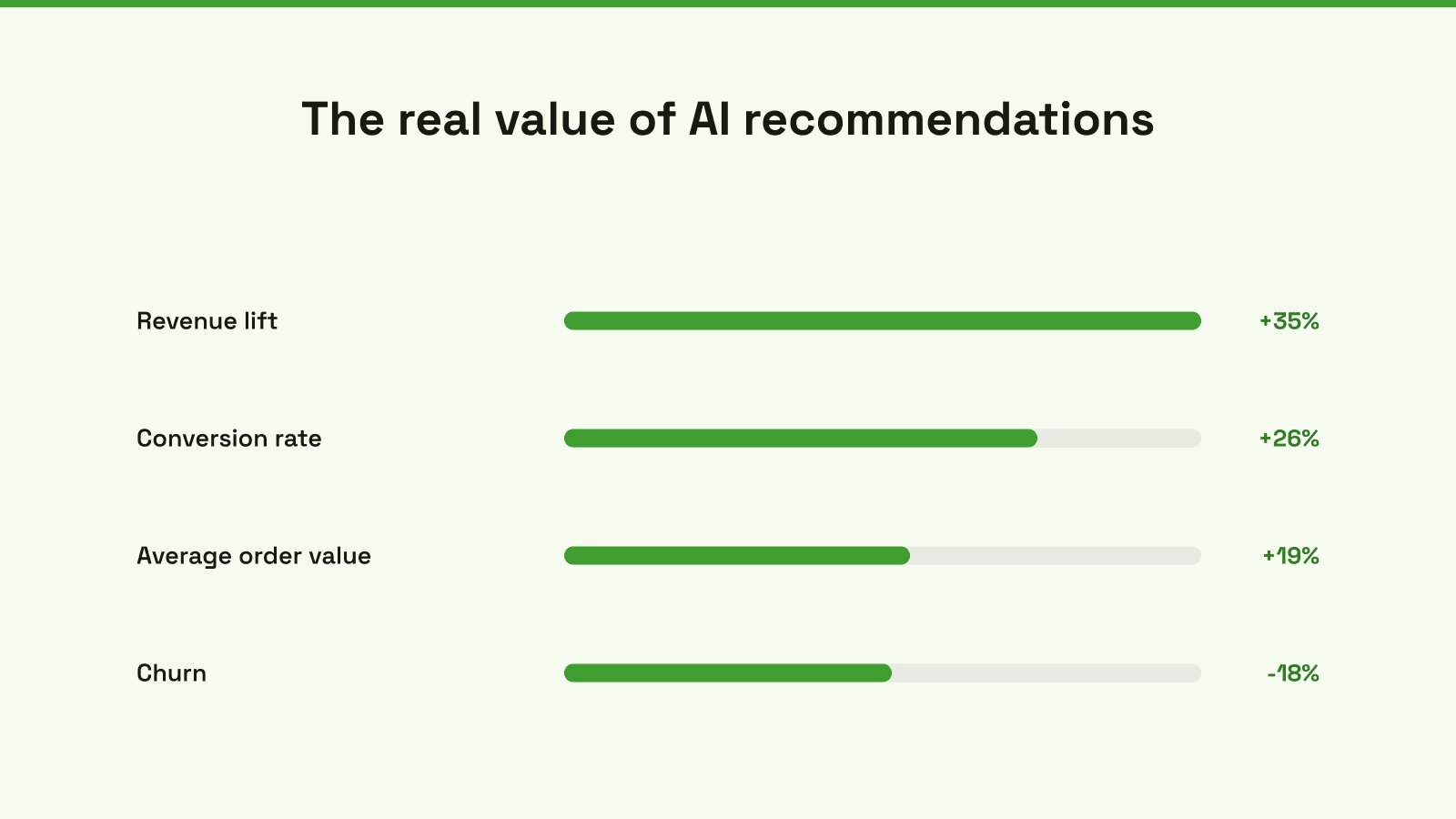
The commercial upside shows up in a few places at once.
- Higher basket depth: relevant suggestions increase the odds that a shopper adds complementary or higher-fit items.
- Stronger repeat purchase rates: useful recommendations reduce the effort required to come back and buy again.
- Better traffic efficiency: the same paid or organic session can produce more revenue when product selection is sharper.
- Wider AI inclusion: external assistants can only recommend products they can parse and trust.
That last point is the one many merchants underestimate.
If ChatGPT, Perplexity, or another shopping assistant cannot interpret your product attributes, variant logic, stock status, shipping terms, or return policy with confidence, your store is less likely to be cited. The loss happens before the click. You never make the shortlist.
Recommendation logic also extends far beyond a widget under the product page. It now influences email flows, support prompts, internal search, category ordering, bundle suggestions, and offsite AI shopping experiences. Founders who still treat recommendations as a design add-on usually measure the wrong thing. They look at widget CTR instead of asking whether their catalog is structured well enough to be selected across channels.
This is why I push merchants to treat recommendation readiness as a data and operations problem first. The upside comes from cleaner inputs and tighter measurement, not from installing one more app block.
If you are working through broader AI visibility, this guide on how to optimize your Shopify store for AI search covers the supporting foundation. For teams auditing what outside systems can access, a crawl website api can help verify whether product and policy content is exposed clearly enough for machine use.
For a Shopify operator, the value of AI recommendations is simple. Better recommendation readiness improves revenue per session and improves your odds of being included when AI systems decide which products to show.
The Data AI Crawlers Need to Recommend You
Most AI visibility problems start with one misconception: merchants assume a live Shopify catalog equals a machine-readable catalog. It doesn't.
An AI crawler or shopping assistant doesn't "understand" your store the way a person does. It looks for structured, explicit signals. Product names, variants, prices, stock status, shipping details, return rules, brand context, and store policies need to be exposed in a format machines can process consistently.
AI systems need structured facts, not theme copy
A standard Shopify theme usually covers the basics for a shopper. It often falls short for AI product recommendations because critical facts live in disconnected places:
- variant selectors
- metafields that never surface in structured markup
- app blocks
- policy pages with vague formatting
- shipping details buried in FAQ copy
That creates ambiguity. And ambiguity gets brands excluded.
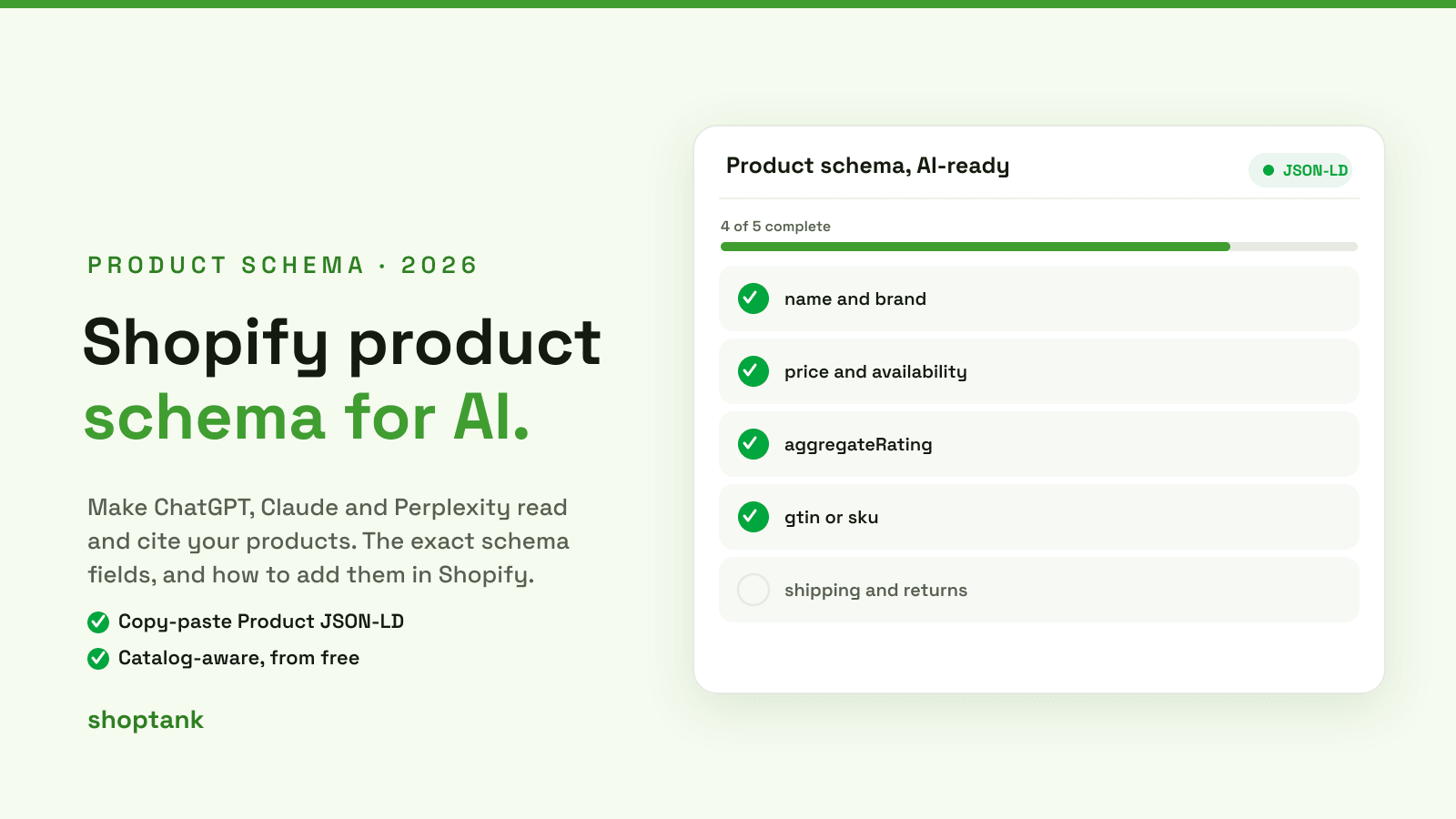
Two technical pieces matter most here: rich schema markup and an llms.txt file. Schema helps machines interpret products, offers, availability, and store-level context. An llms.txt file gives AI crawlers a clearer map of the important information they should read and prioritize.
If you're working through broader AI search readiness, this practical guide on optimizing a Shopify store for AI search is worth reading alongside your recommendation strategy.
For teams that want to inspect how machine-readable a site really is, tools such as a website crawl API for structured extraction workflows can help audit what a crawler can access versus what a merchant assumes is visible.
Essential data for AI visibility
The difference between a recommendable store and an ignored one often comes down to coverage. Not just product feed coverage. Operational coverage.
| Data Category | Required Information Examples |
|---|---|
| Product identity | Product name, brand, category, SKU, variant relationships |
| Commercial data | Current price, compare-at price if shown, availability, stock status |
| Attribute depth | Material, size, color, compatibility, intended use, care details |
| Fulfillment context | Shipping zones, delivery constraints, handling expectations |
| Policy clarity | Return policy, refund conditions, exchanges, warranties if offered |
| Brand context | Brand positioning, target use case, product differentiators |
| Trust signals | Clear descriptions, consistent catalog fields, current policy pages |
Why catalog freshness breaks recommendation quality
This is the part basic guides usually skip. Clean data isn't enough if it isn't current.
Neutral ecommerce guidance warns that recommendation quality erodes when product feeds change daily across variants, stock status, shipping zones, and return rules (Inriver guidance on AI recommendation data readiness). That's exactly the operational reality on Shopify. Merchants launch seasonal products, adjust prices, go out of stock, change shipping coverage, and update return rules. If structured data doesn't keep up, AI systems end up reading yesterday's store.
If your catalog changes faster than your structured data, the AI sees a store that no longer exists.
This is also why "we already have schema" is often a weak answer. Many stores have partial schema. Fewer have complete, synchronized schema that reflects product, policy, and fulfillment realities together.
The practical standard is higher than most merchants expect. AI product recommendations depend on whether your store can publish a coherent, up-to-date version of itself across all the details a machine needs to trust.
How to Implement AI-Ready Data on Shopify
There are two paths on Shopify. You can build AI-ready data manually, or you can automate most of the work with a purpose-built layer. Manual can work. It just creates more maintenance than most merchants expect.
Manual setup works, but it creates ongoing maintenance
The manual route usually looks straightforward at first:
- Map your product data from Shopify fields, metafields, and policy content.
- Add or extend schema markup so products, offers, policies, and brand details are machine-readable.
- Create an llms.txt file that points AI crawlers to the right pages and content areas.
- Audit variant handling so size, color, availability, and pricing remain consistent.
- Recheck everything after catalog changes because feeds, policies, and apps drift.
The problem isn't whether a developer can do this. The problem is staying accurate after the initial sprint.
An expert implementation pattern for recommendation systems starts with defining objectives, then collecting and cleaning first-party data, choosing an algorithm or data format, integrating it, and continuously monitoring the output. Guidance from Tealium makes the same point directly: skipping any step, especially monitoring, makes optimization and ROI attribution harder (Tealium guide to implementing AI-based recommendations).
For Shopify teams, that means the setup isn't the project. The upkeep is.
A simpler path for non-technical teams
If you don't want to manage schema logic and crawler-facing files by hand, use a tool built for AI visibility workflows. One example is how Shopify AI catalog visibility works, which outlines the core mechanics merchants need to cover.
In practice, a specialized app can handle tasks like:
- Generating an llms.txt file without requiring manual hosting work
- Injecting broader schema coverage for products, pricing, shipping zones, and returns
- Creating a machine-readable brand profile that helps AI systems understand what your store sells
- Keeping visibility data aligned as your catalog and store policies evolve
That matters most for lean teams. A founder, ecommerce manager, or agency can usually manage content accuracy. They usually shouldn't spend time hand-maintaining recommendation visibility plumbing.
A short demo helps if you want to see what this workflow looks like inside a Shopify-focused setup:
Implementation checklist that actually matters
Don't overcomplicate this. For AI product recommendations, the merchant-side build should answer a few direct questions.
- Can a machine identify each product clearly? Product title, variant structure, brand, attributes, and price should be unambiguous.
- Can a machine tell whether the offer is current? Availability and pricing need to reflect the live catalog, not stale markup.
- Can a machine understand buying conditions? Shipping coverage, returns, and store policies should be explicit.
- Can a machine tell what makes the brand distinct? If every description is generic, AI systems have little reason to choose you over comparable stores.
- Can your team maintain the setup without a developer queue? If not, quality will degrade.
The right implementation is the one your team can keep accurate every week, not the one that looked impressive on launch day.
The manual path makes sense if you have technical resources, a stable catalog, and strong QA discipline. Automated tooling makes more sense if your catalog changes often, your store runs multiple apps, or your team needs a no-code workflow.
Either way, the standard is the same. AI systems need structured, current, merchant-controlled data. If you don't publish it cleanly, they can't recommend you reliably.
Testing and Monitoring Your AI Visibility
Setup without monitoring is guesswork. A store can look AI-ready in the theme and still fail in practice because crawlers miss pages, policies aren't exposed clearly, or the brand doesn't show up in recommendation outputs.
What to measure after setup
The wrong way to evaluate AI product recommendations is to stop at impressions, generic engagement, or "it seems more visible."
Industry guidance on recommendation systems emphasizes conversion-related KPIs such as click-through rate, conversion rate, average order value, and revenue per recommendation because those metrics separate real business impact from vanity engagement (RBMSoft guide to AI-powered product recommendation KPIs).
For merchant-side AI visibility, apply the same discipline. Look at two layers of measurement.
Visibility layer
- Crawler activity: which AI-related user agents or systems are reaching your important pages
- Coverage quality: whether product, policy, and brand pages are being accessed consistently
- Mention tracking: whether your brand appears in AI assistant responses for relevant product prompts
- Competitor comparison: which brands get surfaced in the same recommendation set
Commercial layer
- Click-through behavior: whether recommendation-led visits engage differently
- Conversion quality: whether those sessions buy at a stronger rate
- Order composition: whether recommendation-influenced sessions carry higher-value baskets
- Revenue attribution: whether recommendation visibility corresponds to commercial lift
How to tell if visibility is improving
You don't need a perfect attribution model to spot progress. You need a repeatable review process.
Check whether AI systems increasingly reflect your actual store reality:
- Are they naming the right products?
- Are they describing your shipping or return conditions correctly?
- Are they surfacing the brand for the right use cases?
- Are they mentioning competitors less often in prompts where you should be relevant?
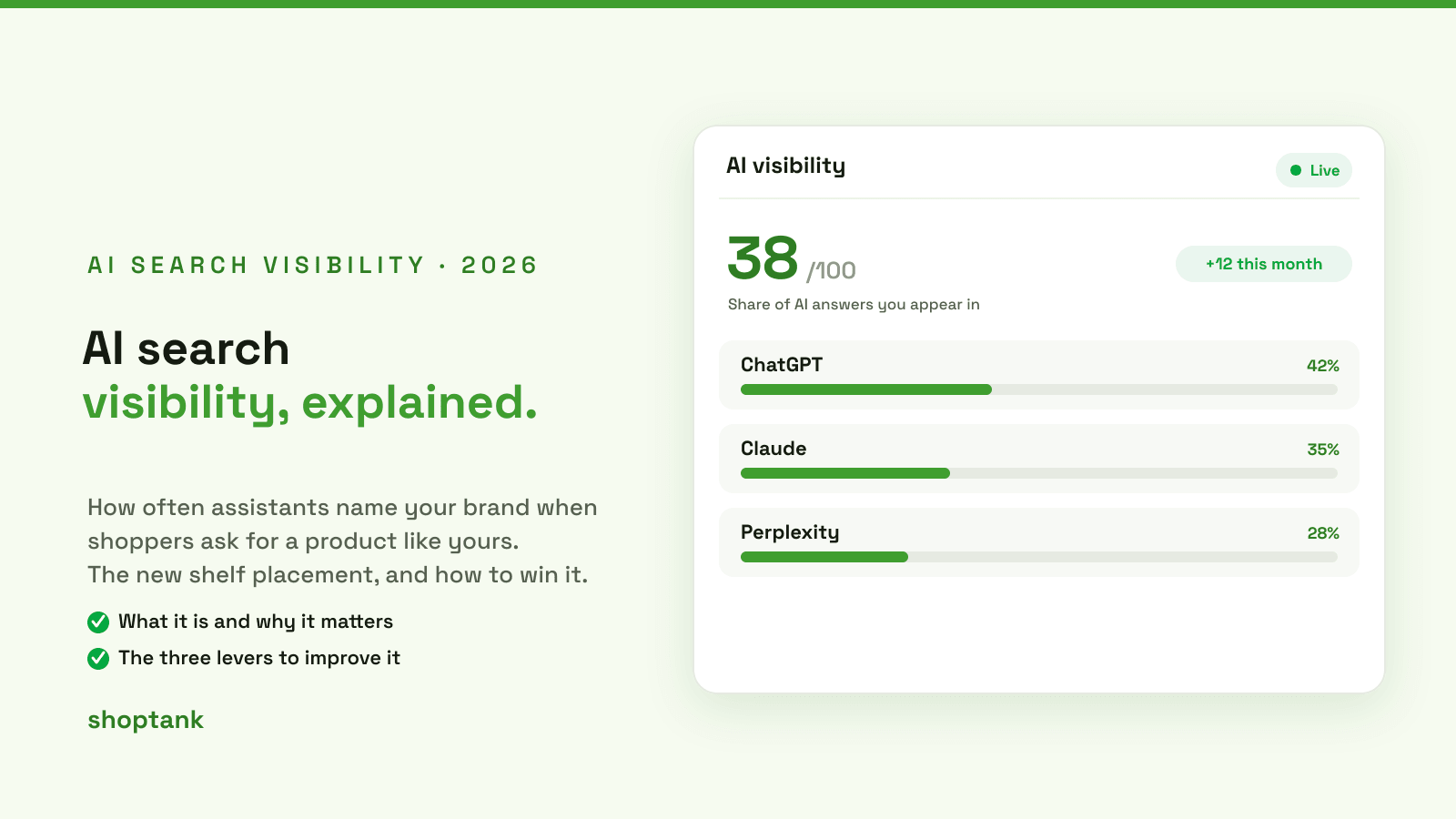
A useful internal benchmark is an AI Visibility Score or similar composite measure that tracks how fully your brand is exposed and understood relative to peers. The exact scoring method can vary by tool, but the concept is sound. Visibility isn't binary. It improves as your store becomes easier for AI systems to crawl, parse, and trust.
If recommendation traffic rises but branded AI mentions stay weak, your onsite logic may be improving while external AI visibility still lags.
That distinction matters. Some teams optimize recommendations only inside their store and miss the bigger shift. Buyers now ask external AI systems what to buy before they ever land on your site. Monitoring needs to reflect that reality.
Common Pitfalls and Optimization Best Practices
AI product recommendations do not fail on flashy algorithm problems first. They fail on merchant-side execution. Stores get skipped because their catalog is readable enough to index, but not specific enough to trust in a buying recommendation.
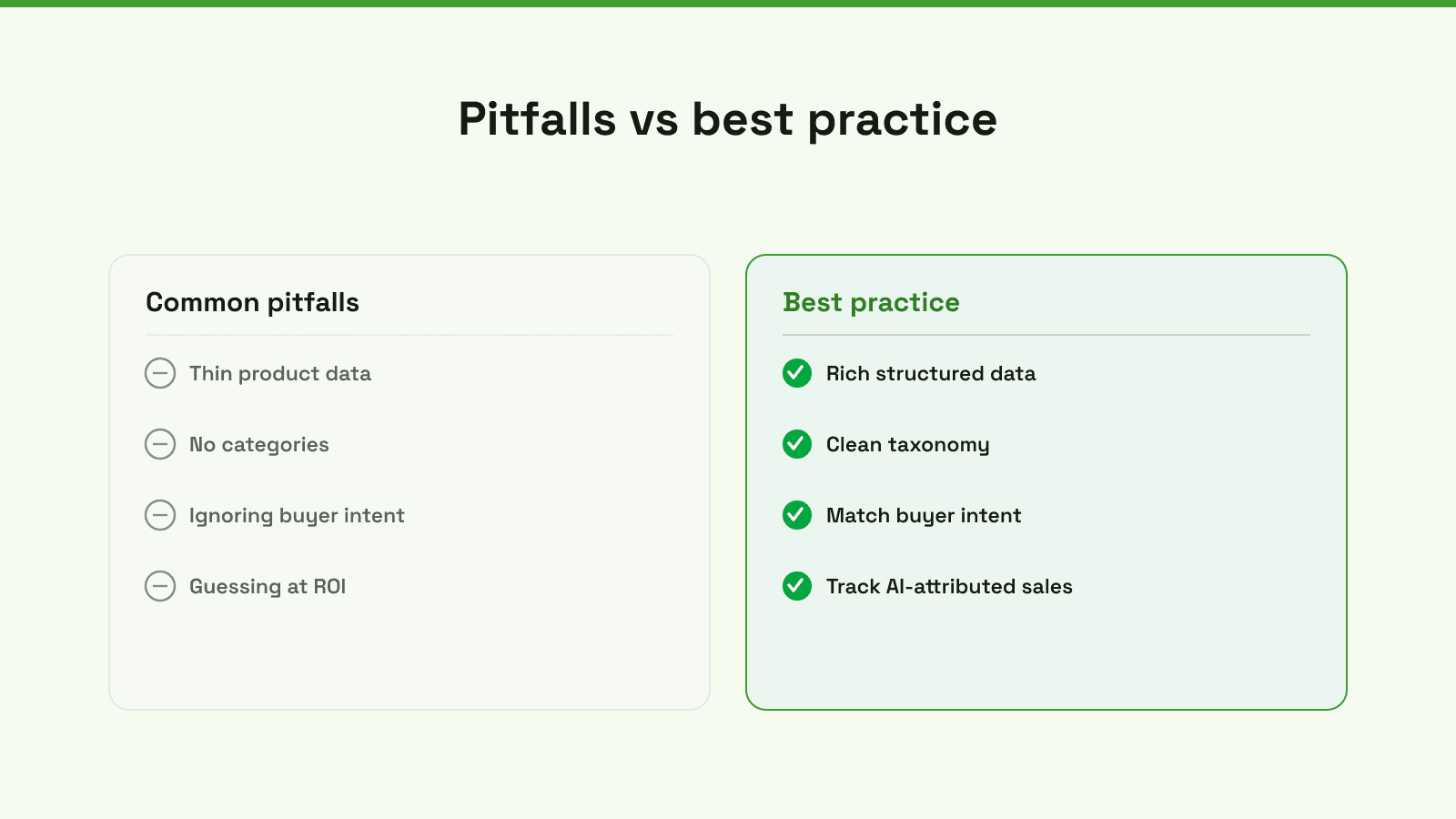
What merchants still get wrong
The pattern I see most often is partial readiness. A Shopify store has titles, prices, images, and maybe some schema from a theme or app. Merchant teams assume that means AI systems have enough context to recommend the product with confidence. They usually do not.
Three failure points show up again and again.
First, the catalog is present but commercially vague. Product pages list specs and generic marketing copy, yet say very little about the actual buying decision. Who is this for? What problem does it solve? What does it replace? What products is it compatible with? Why should it win against similar options? If those answers are missing, AI assistants fill the gap with weak summaries or skip the product entirely.
Second, policy content is written for compliance, not retrieval. Shipping windows, return rules, warranty terms, and regional restrictions often live in long policy pages with inconsistent wording. That creates a trust problem. An AI system that cannot verify fulfillment and post-purchase conditions is less likely to surface the product in a high-intent recommendation.
Third, stores let machine-readable data drift out of sync with the business. Variants change. Bundles get added. Discontinued products stay crawlable. Inventory and policy updates lag behind the structured layer. Recommendation quality drops long before the team sees it in reporting.
This is the data-readiness gap. Basic setup gets you indexed. Recommendation inclusion requires cleaner context, tighter maintenance, and fewer contradictions.
How to make recommendations feel credible
Credibility comes from alignment. Product copy, structured data, policies, and brand positioning need to describe the same store.
Research on AI recommendation transparency found that clear explanations improve trust and perceived fairness, which then influence buying behavior (consumer research on transparency, trust, and AI recommendations). For merchants, the takeaway is practical. AI visibility is not only about being mentioned. It is about being mentioned accurately enough that a shopper will act on it.
Use that standard when you optimize:
- Add buying context, not filler: Write descriptions that explain use case, fit, exclusions, and comparison points.
- State operational details plainly: Keep returns, shipping coverage, delivery expectations, and availability easy to parse.
- Use specific brand language: Replace category clichés with claims tied to your actual product advantage.
- Call out constraints early: Compatibility limits, material differences, subscription terms, and fulfillment exceptions should be explicit.
- Audit changes monthly: Review top products, policy pages, and structured data after catalog updates, promos, or merchandising changes.
A recommendation earns trust when the store says one clear thing everywhere.
The merchants who gain ground in AI recommendations are not the ones with the most plugins installed. They are the ones with fewer gaps between what shoppers need to know and what machines can verify.
If you want a no-code way to make your Shopify catalog more legible to AI shopping assistants, Shoptank handles merchant-side visibility tasks like structured data, llms.txt generation, and AI brand monitoring so your products are easier for systems like ChatGPT, Perplexity, Gemini, Claude, and Copilot to understand.