How to Do Complete SEO and GEO for Your Shopify Store
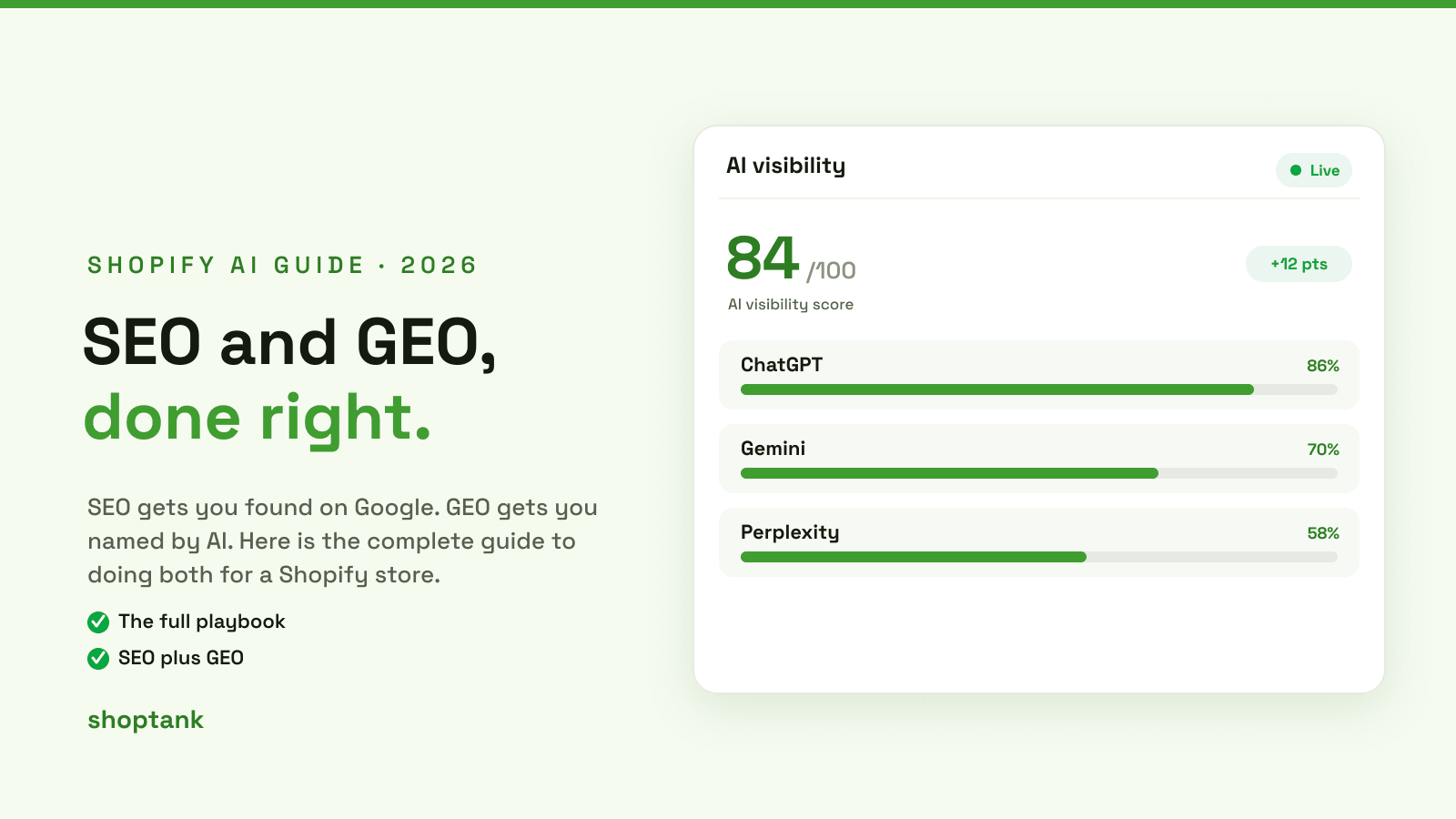
There are now two ways a shopper finds your store. They search Google, which is SEO, or they ask an AI what to buy, which is GEO. SEO gets you found in a list of links. GEO gets you named in the answer. You need both, and the good news is they share a foundation. Here is the complete guide to doing SEO and GEO for a Shopify store.
Key takeaways
- SEO ranks your pages on Google. GEO gets your store named in AI answers. Both matter now.
- They share a foundation: structured data, good product content, and trust signals help both.
- Measure SEO with rankings and traffic, and GEO with your AI rank, which Shoptank tracks free to start.
On this page
The complete picture
Getting found in 2026 comes down to four things. Three are familiar SEO, and the fourth is GEO.
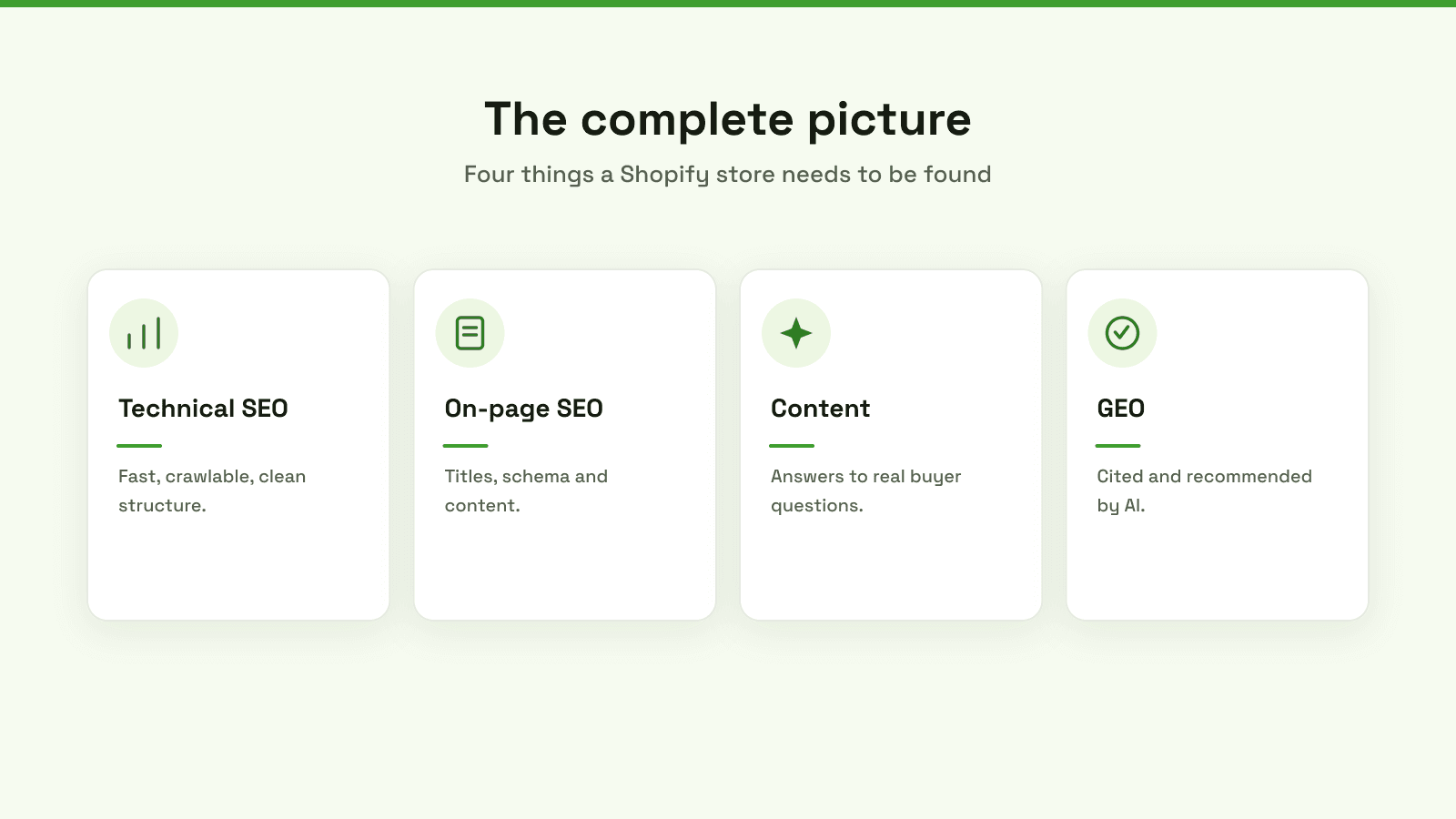
Treating these as one system, rather than SEO now and GEO later, is what keeps the work efficient. Most of the foundation counts twice.
The SEO half
Classic search optimization still brings the traffic buyers get from Google. The basics for a Shopify store have not changed much.
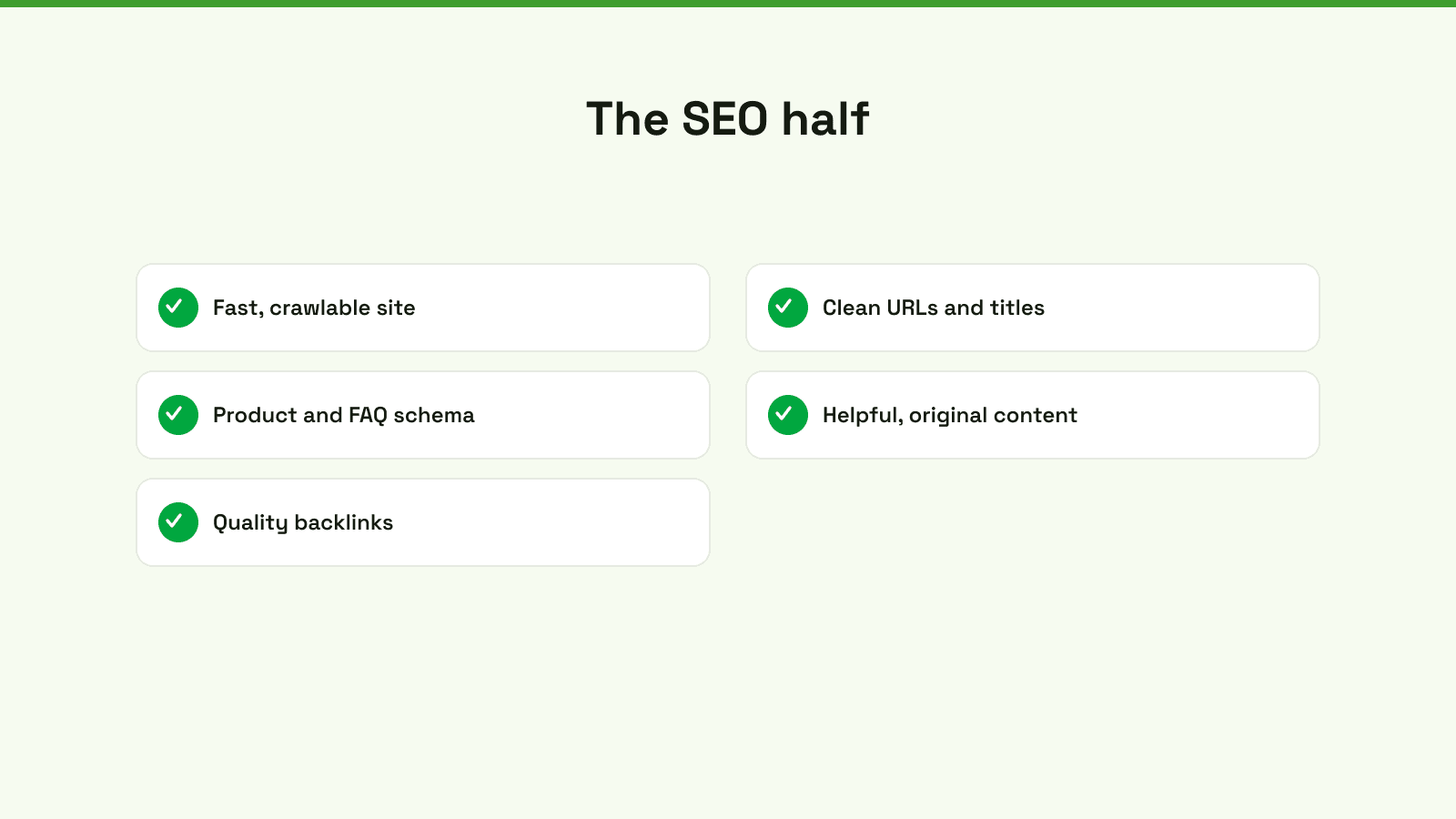
- Fast, crawlable site. Speed and clean structure so search engines can read every page.
- Clean URLs and titles. Descriptive, keyword-aware titles and tidy URLs.
- Product and FAQ schema. Structured data that earns rich results. See adding schema markup.
- Helpful, original content. Answer the questions buyers actually search.
- Quality backlinks. Earn links from sites that matter in your niche.
The GEO half
Generative engine optimization is the newer half: getting recommended when a shopper asks an assistant what to buy.
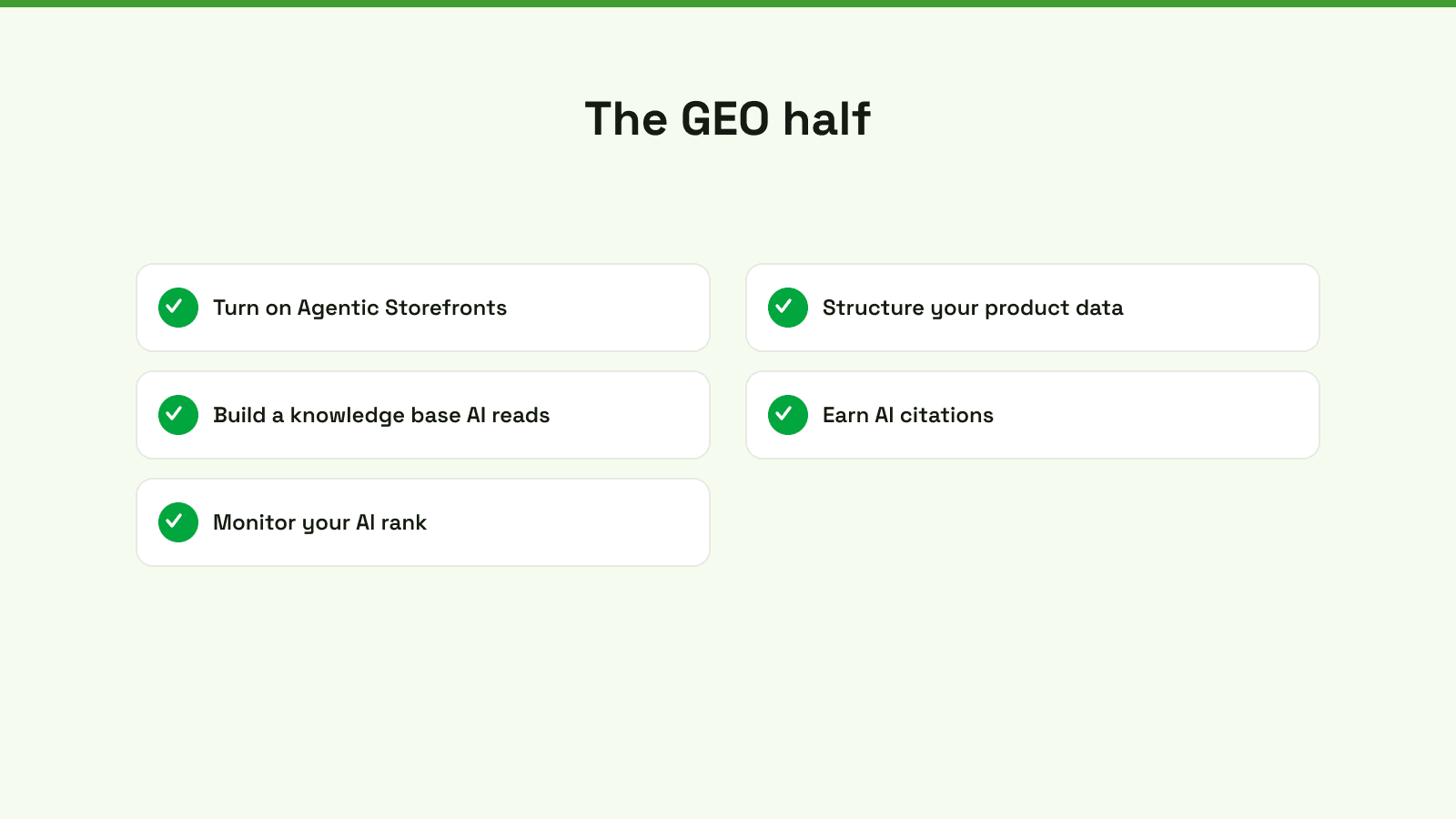
- Turn on Shopify Agentic Storefronts. The free feature that puts your products in the catalog AI shops from.
- Structure your product data. Complete titles, attributes and categories so AI understands what you sell.
- Build a knowledge base. Publish brand and product answers in the form assistants read.
- Earn AI citations. Reviews and mentions across the web tip the answer your way.
- Monitor your AI rank. Track where you land so you can improve it.
For the step-by-step on this half, see our dedicated guide on how to do GEO for a Shopify store.
Where they overlap
Here is why doing both is less work than it sounds. Structured data, complete and accurate product information, clear content, and trust signals like reviews help you rank in Google and get recommended by AI. Build that foundation once and both channels benefit. The parts that differ are the edges: backlinks lean SEO, and the Shopify Catalog and knowledge base lean GEO.
How to measure both
Measure SEO the usual way, with rankings and organic traffic in your analytics and Search Console. Measure GEO by running your buyer queries against the assistants and reading the answers, which Shoptank automates, recording your position per query and per engine over time. To compare the AI tools, see the best AI visibility tools for Shopify.
Start with the shared foundation, then weight your effort toward where your buyers are. On Shopify, you can measure your AI side free.