Generative Engine Optimization for B2B SaaS: How to Get Recommended by ChatGPT and Claude
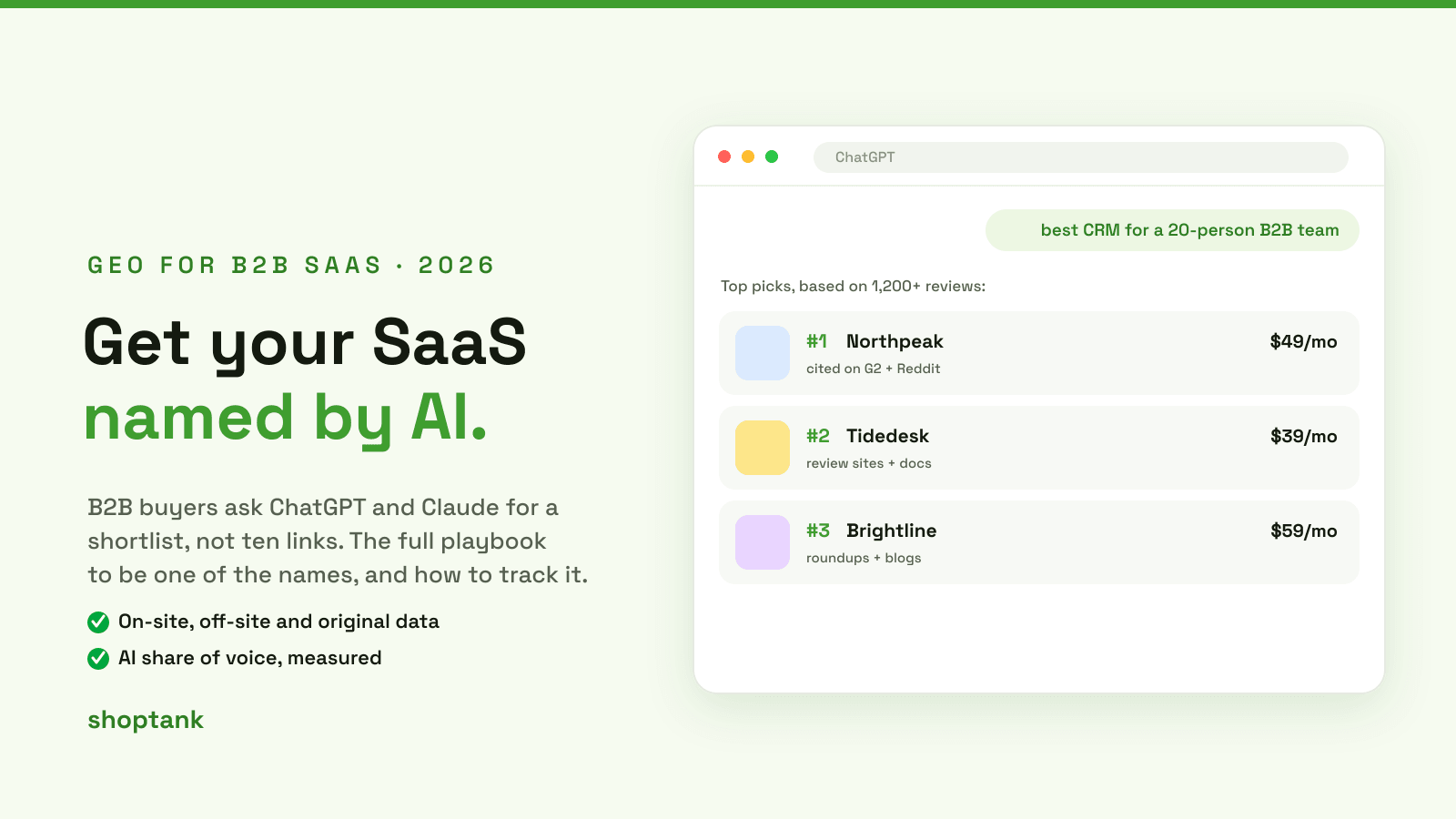
Your next B2B buyer will not read ten blue links. They will ask ChatGPT or Claude "what is the best CRM for a 20-person remote sales team" and act on the three names that come back. Generative Engine Optimization (GEO) is how you become one of those names. Here is the full playbook, and how to measure it.
From search engines to answer engines
The buyer journey has collapsed. Instead of scanning a results page, the buyer receives a synthesized answer that names a short list of tools. To land on that list you have to understand where the model gets its answer. It draws from two places:
- Parametric knowledge. What the model already learned in training. This favors established brands with a large, consistent footprint across the web.
- Retrieval-augmented generation (RAG). A live web search run at answer time, pulling current pages, reviews and citations. This is where a challenger can win, because it is decided by what exists on the web right now.
The engines behave differently, and the difference should shape where you invest.
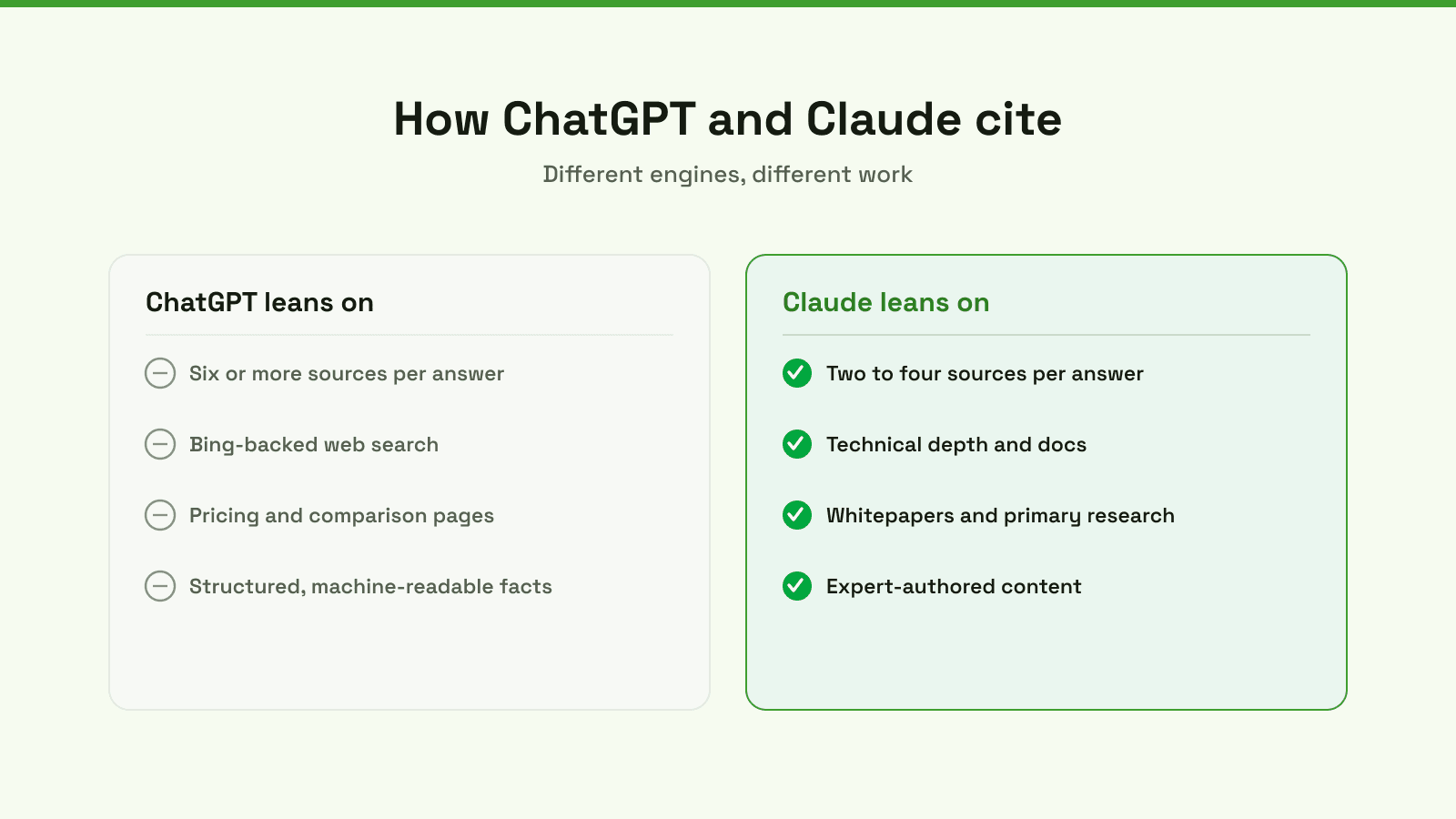
| Dimension | ChatGPT | Claude |
|---|---|---|
| Sources per answer | Higher volume, often six or more | Selective, often two to four |
| Retrieval backbone | Bing-backed web search | Web search plus strong parametric recall |
| Content it favors | Structured pricing, product and comparison pages | Technical depth, documentation, primary research |
| What wins a citation | Clear, machine-readable facts and consensus | Authoritative, expert-authored substance |
The takeaway: to win ChatGPT you make your facts unambiguous and your consensus loud. To win Claude you go deep, technical and credentialed.
Pillar 1: On-site information architecture and technical GEO
Your own site will not win the recommendation by itself, but it is table stakes. If a model cannot parse you cleanly, it will not risk citing you.
Answer the query in the first 150 to 300 words. Declarative, up-front answers get lifted far more often than the same information buried under a narrative intro. Lead every key page with a direct statement of what the product is, who it is for, and what it costs.
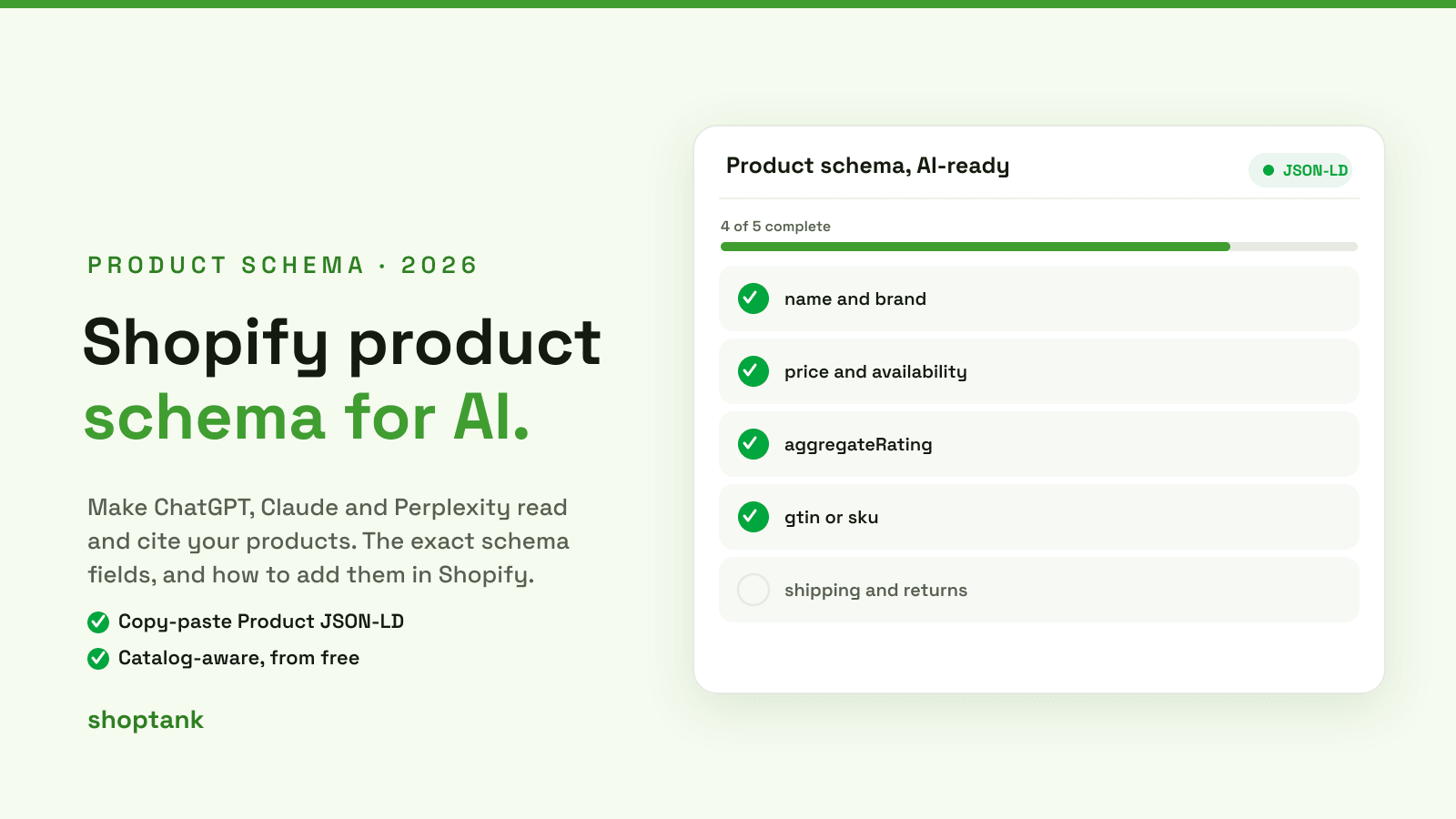
Ship complete structured data. Schema removes ambiguity for AI crawlers:
- SoftwareApplication and Product schema for features, pricing tiers and operating systems.
- Organization schema so the model resolves your brand as a single entity.
- FAQPage schema to expose direct question-and-answer pairs. For the ecommerce version of this, see Shopify product schema for ChatGPT.
Publish machine-readable data. An llms.txt file in your root can expose your docs, API reference and core value props to crawlers. Be honest about it though: no major assistant has confirmed using llms.txt to choose citations, so treat it as low-cost hygiene, not a growth lever.
Build the page types AI selects. Some pages get cited far more than others:
| Page type | Why AI favors it | Best for |
|---|---|---|
| Transparent pricing page | Models systematically prefer public pricing over a "contact sales" wall they cannot read | ChatGPT, Gemini |
| Direct competitor comparison | Matrix tables are trivially parseable and map to "X vs Y" prompts | ChatGPT, Perplexity |
| Integration and API docs | Technical depth carries disproportionate weight for hard queries | Claude |
Pillar 2: Off-site consensus and multi-surface presence
Here is the number that reorders most GEO budgets: by multiple analyses, the large majority of citations in AI recommendations, often put around 80 percent, come from third-party sources rather than the vendor's own site. You cannot win GEO from your own domain alone.
- Own your review platforms. Assistants continuously query G2, Capterra and TrustRadius to extract feature scores and consensus sentiment. Keep these profiles complete, current, and rich with recent reviews.
- Show up in the communities. Reddit threads on r/sales, r/devops and r/SaaS are heavily cited by ChatGPT and Perplexity. Monitor the category threads and earn authentic mentions by being genuinely useful, from your own accounts, not through astroturfing that moderators remove.
- Get into the roundups. Niche "best B2B software" listicles and analyst benchmarks are exactly the pages models cite for shortlist queries. Pitch inclusion with a specific, verifiable reason you belong.
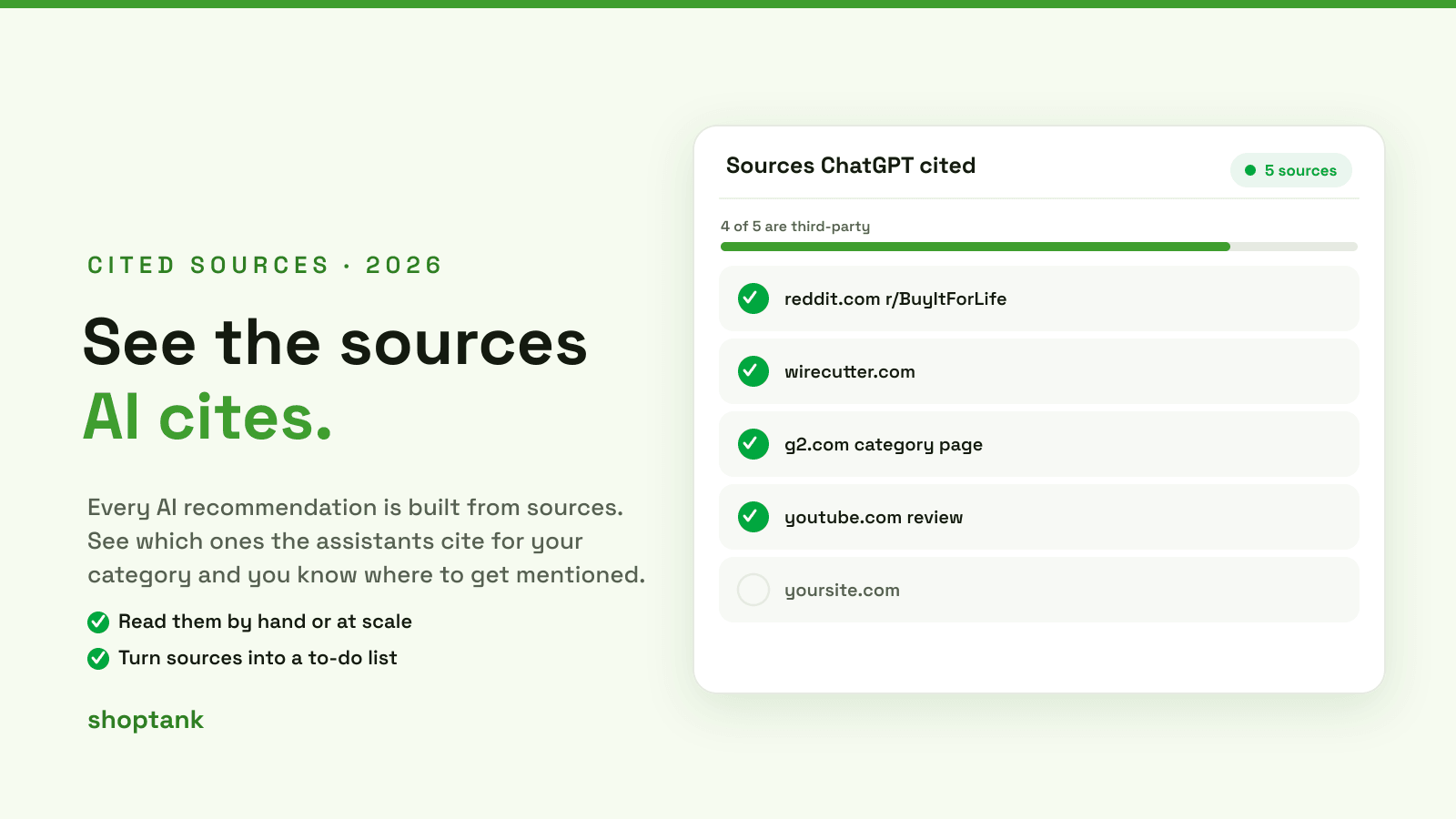
To do this efficiently you need to know which sources already decide your category. See how to find the sources AI assistants cite.
Pillar 3: Original data and authoritative E-E-A-T
The most durable citations go to primary sources. If you publish something no one else has, you get cited every time the topic comes up, across every model.
- Publish original research. Proprietary benchmarks, survey data or product telemetry ("we analyzed 10,000 sales calls and found...") become the reference other pages cite, which compounds your presence.
- Attribute to named experts. Link author profiles to verified credentials, LinkedIn and external publications. Expert-authored content is exactly what Claude weights, and it signals the experience and authority that E-E-A-T rewards.
Measuring and tracking B2B AI search visibility
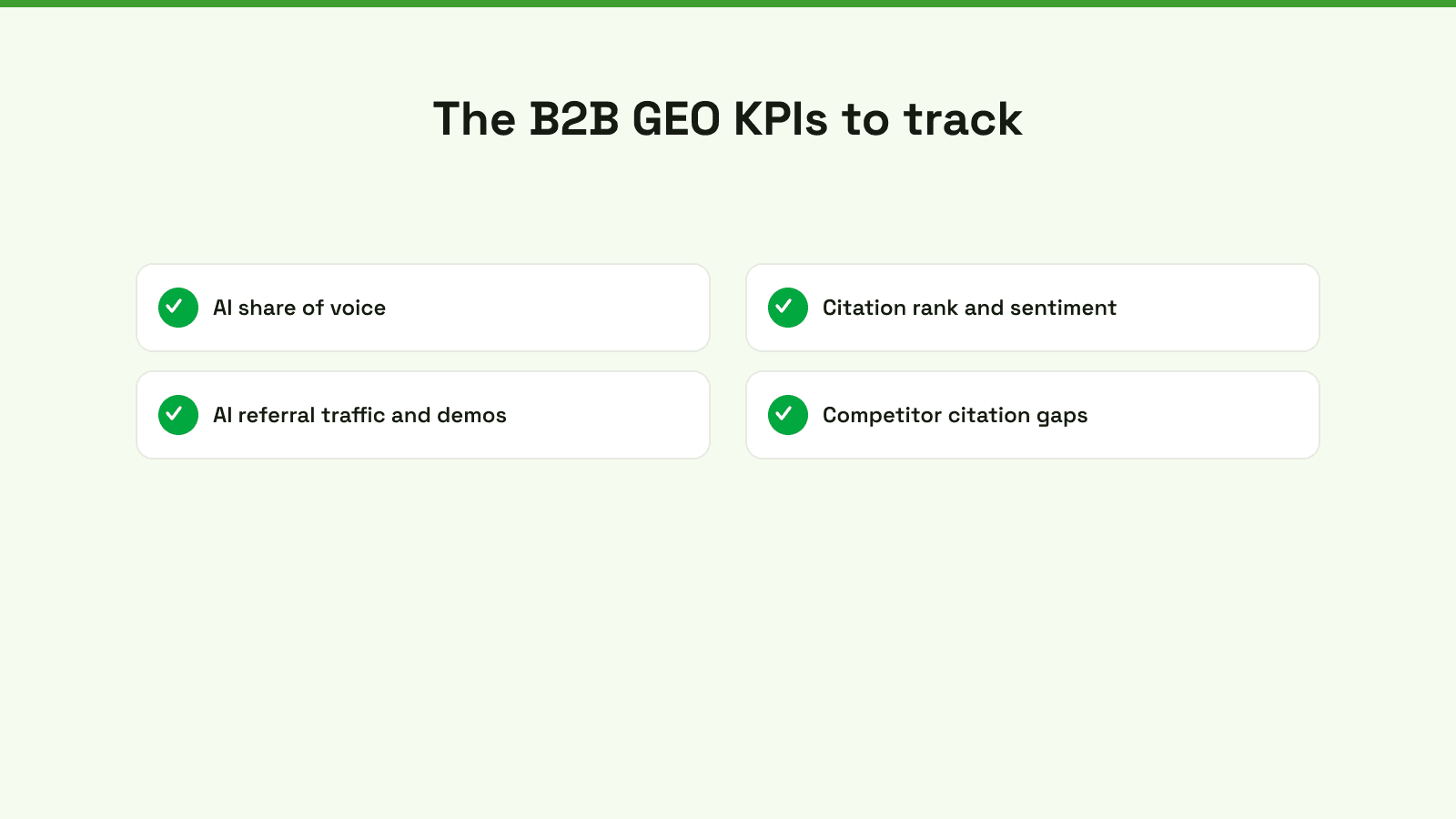
You cannot improve what you do not measure. Track four things:
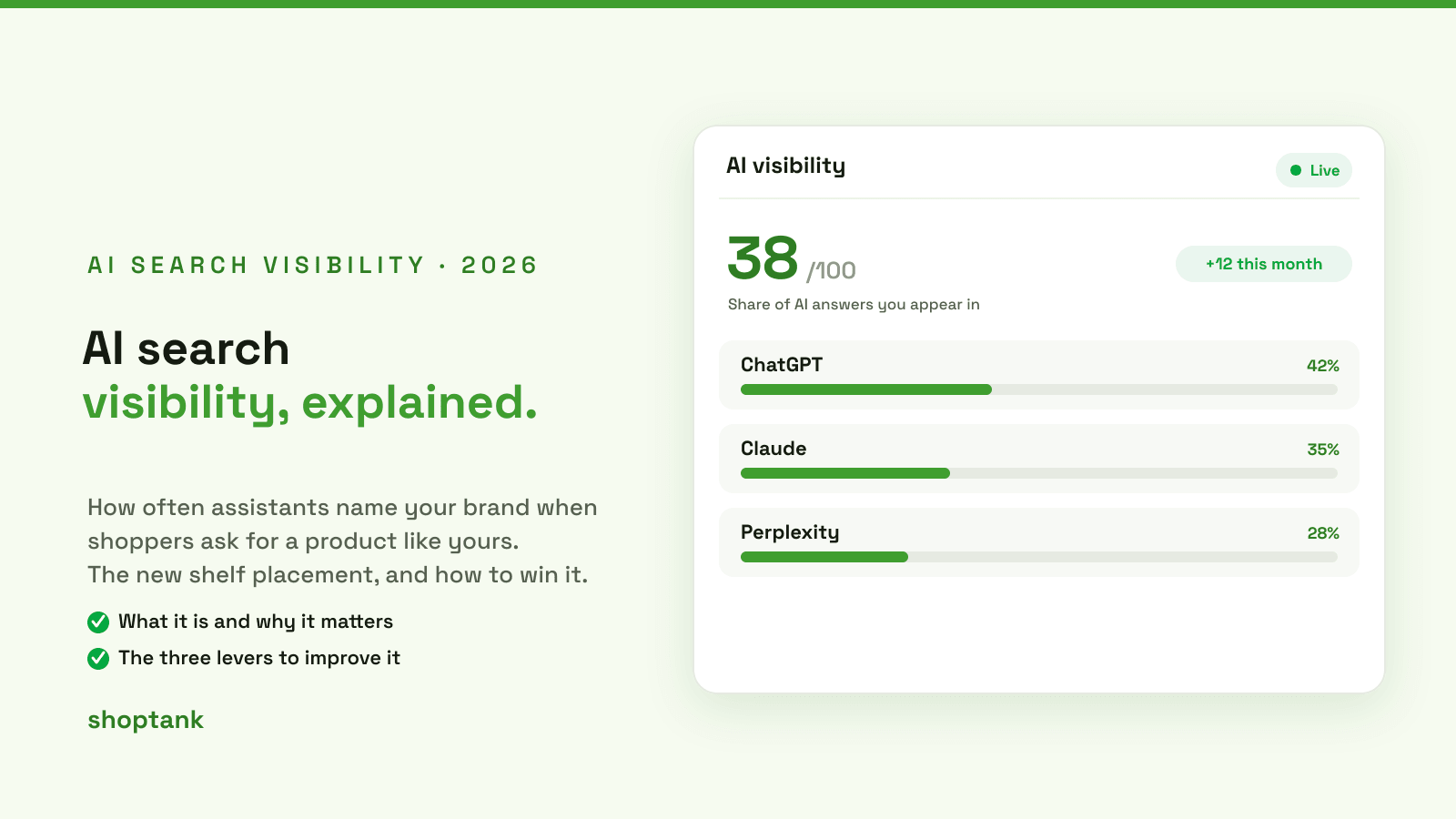
- AI Share of Voice. The percentage of your category prompts where your brand is mentioned at all.
- Citation rank and sentiment. Are you named first, or as a secondary alternative, and how does the model describe you.
- AI referral traffic and conversion. Qualified demo requests arriving from chatgpt.com, claude.ai and perplexity.ai.
- Competitor citation gaps. The prompts where a rival is named and you are not, which is your to-do list.
This is the job Shoptank does: it runs your prompt sets across ChatGPT and Claude (Perplexity is on the roadmap), records who is cited and the sources behind each answer, finds the gaps where competitors are named instead of you, and turns each into an action card with a drafted fix. Track your GEO in one tool, or read how to get recommended by ChatGPT.
The B2B GEO playbook at a glance
| Pillar | Tactic | Primary engine | Target outcome |
|---|---|---|---|
| Technical on-page | SoftwareApplication schema, llms.txt, public pricing | ChatGPT, Gemini | Clear entity recognition and pricing extraction |
| Technical depth | Implementation docs, API guides, original survey data | Claude | High-confidence citation on technical queries |
| Off-site consensus | G2 reviews, Reddit discussions, third-party listicles | ChatGPT, Perplexity | Top-three placement in "best category software" prompts |
| Tracking | Prompt-set monitoring, citation gap analysis | All models | Pipeline attribution from AI referral traffic |
Start where you have the most leverage: make your pricing and comparison pages machine-readable this week, then go earn the third-party consensus that does 80 percent of the work. See where you stand first, free, and let the gaps set your roadmap.