How Do I Get My Brand Recommended by ChatGPT When Someone Asks for a Product Like Mine?
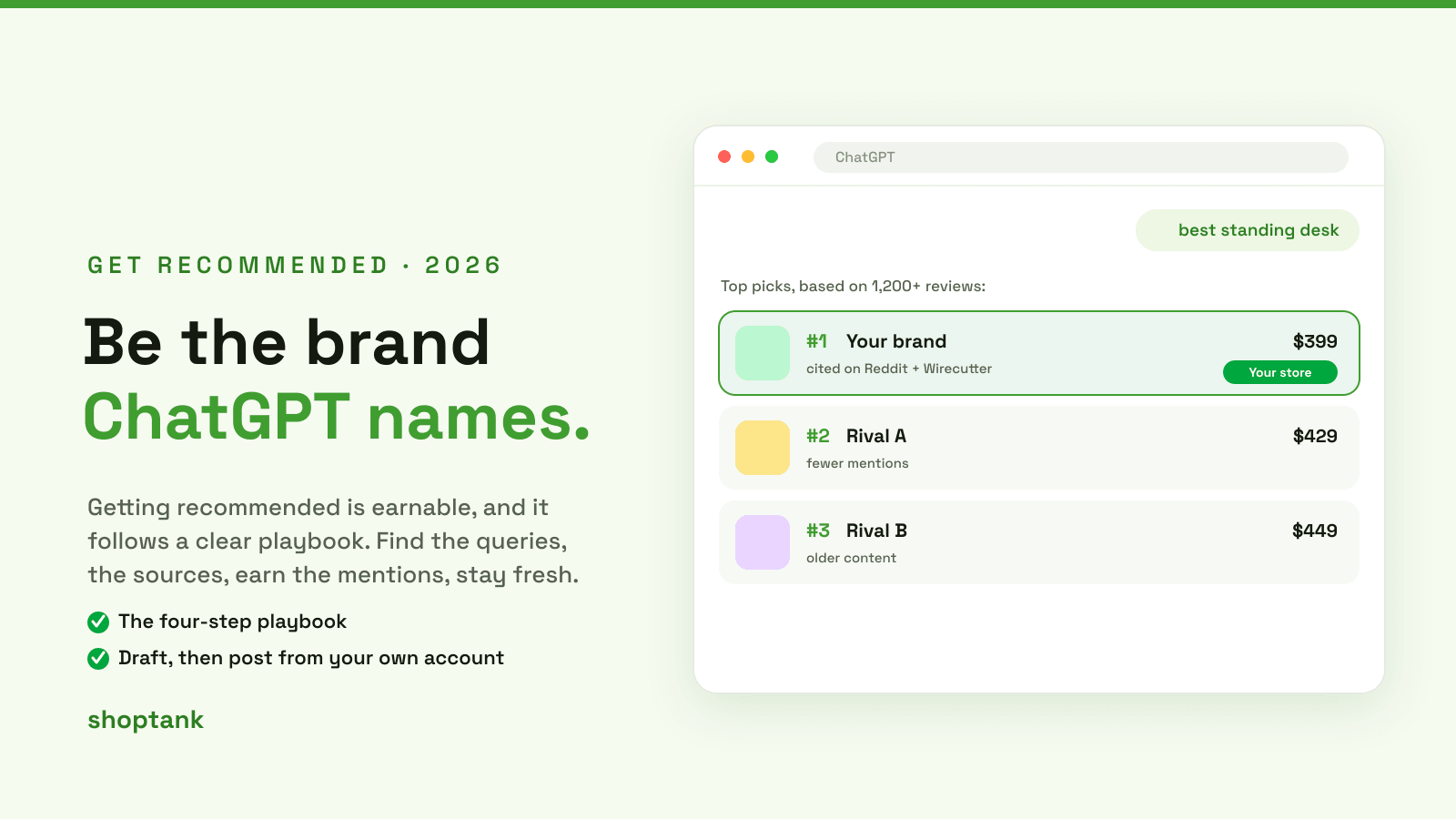
You want the same thing your competitor already has: when a buyer asks ChatGPT for a product like yours, your brand gets named. The good news is that this is earnable, and it follows a clear playbook. The catch is that it is not about polishing your homepage. It is about being present in the sources ChatGPT reads. Here is how to do it.
Key takeaways
- ChatGPT recommends the brands that appear in the sources it cites for a query, not the brands with the best website.
- The playbook: find the queries, find the sources, earn the mentions, keep them fresh.
- Third-party mentions (Reddit, review sites, roundups) do more than your own pages, though your pages still need to be clear and current.
- You do not have to guess. Shoptank shows the exact sources to target and drafts what to say. First though, understand why your competitor shows up and not you.
The four steps
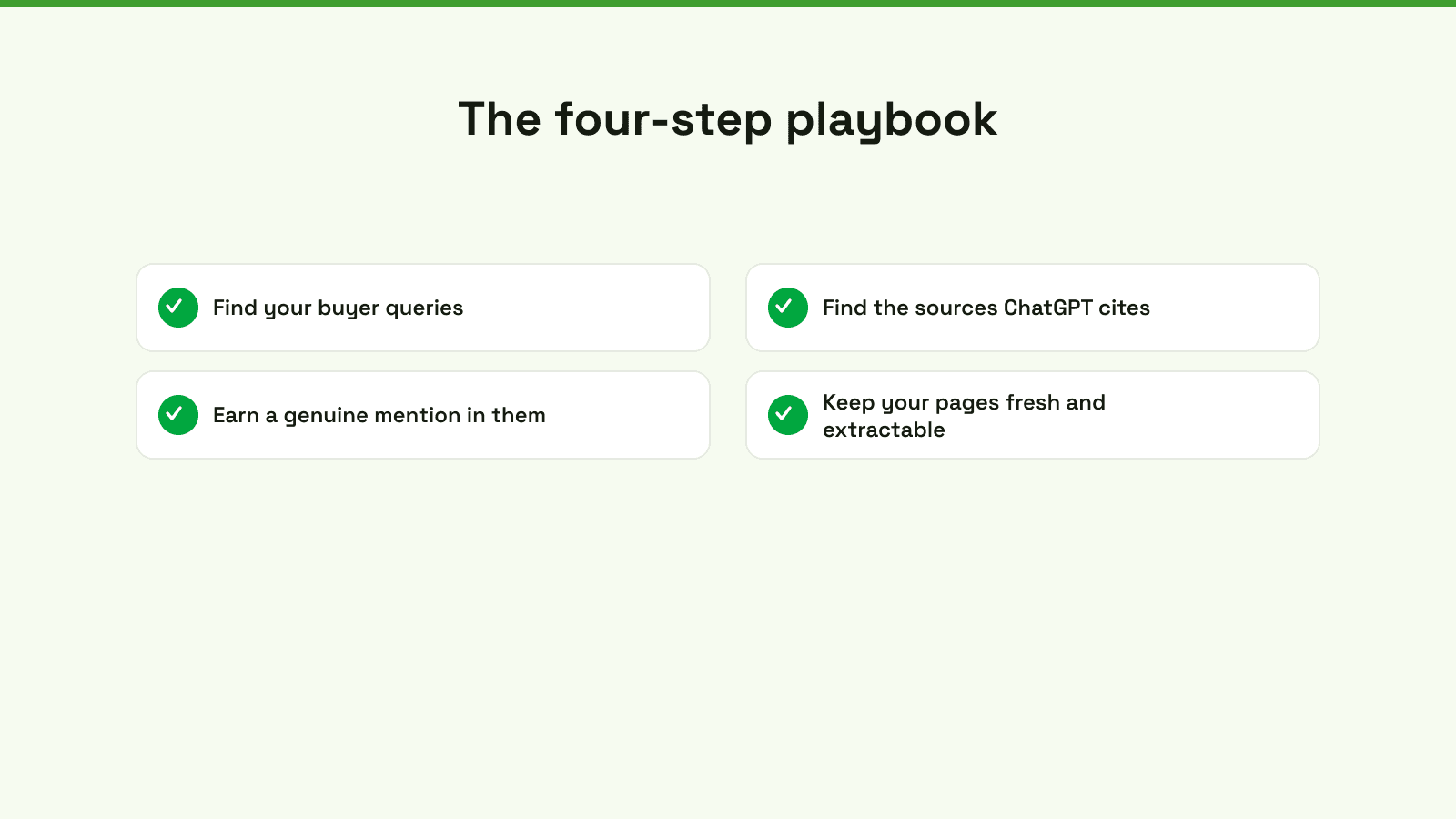
1. Find your buyer queries
Start with the questions a real buyer would type: "best [product] for [use case]", "[product] under [price]", "alternatives to [competitor]". These are the moments you want to win. List ten to twenty. These become the queries you track and the phrases your content should answer directly.
2. Find the sources ChatGPT cites
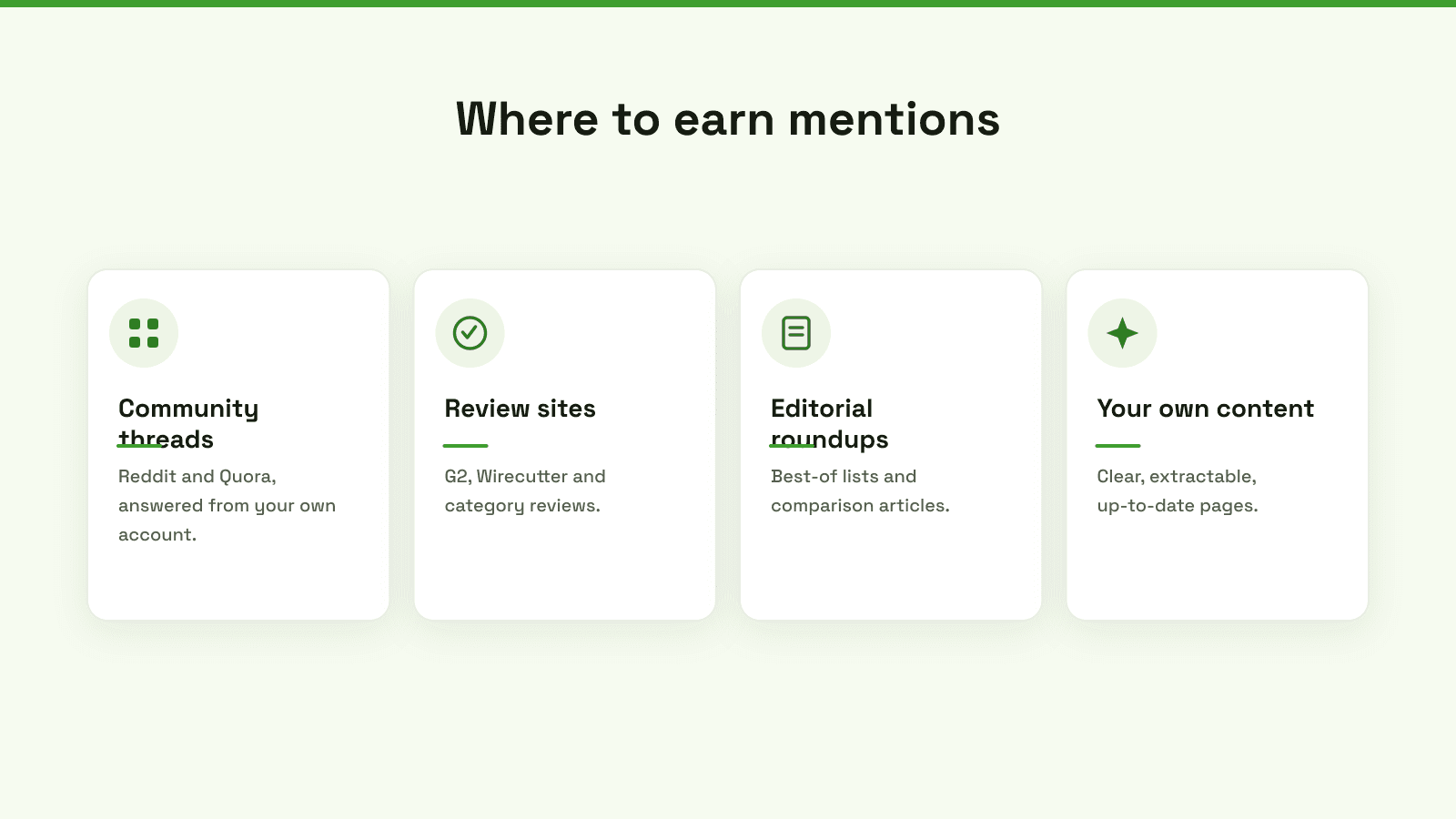
For each query, see which sources the answer is built from. It is usually a mix of community threads, review sites and roundups. Those are the pages you need to be on. The manual way is to ask and read the citations; the tracked way is to let a tool log them for you. Either way, this list is where the work happens. See how to see which sources AI assistants cite.
3. Earn a genuine mention
Now get named in those sources, the right way. In community threads, contribute real answers from your own account, not spam. On review sites, make it easy for happy customers to leave honest reviews. For roundups, pitch editors with a specific, verifiable reason your product belongs. Being helpful and being honest is not just ethical here, it is what survives moderation and what the models keep citing. Shoptank drafts each reply and pitch for the gaps it finds, and you review and post them yourself.
4. Keep your pages fresh and extractable
When the model does land on your own site, make it easy to quote. Lead with a direct answer, add a comparison table, include specific numbers, and show a visible "last updated" date. Fresh, structured pages get pulled into answers far more often than stale marketing copy.
Then measure it
Re-run your queries and watch your brand move into the answer. Shoptank tracks this across ChatGPT and Claude (Perplexity is on the roadmap) so you can see which mentions moved the needle. Want the fastest start? Run your first check free, or connect Shoptank to Claude and ask it to find your gaps and draft your way in. For the wider tooling landscape, see the best AEO tools.