What Is AI Search Visibility for Ecommerce Brands (and How Do You Improve It)?
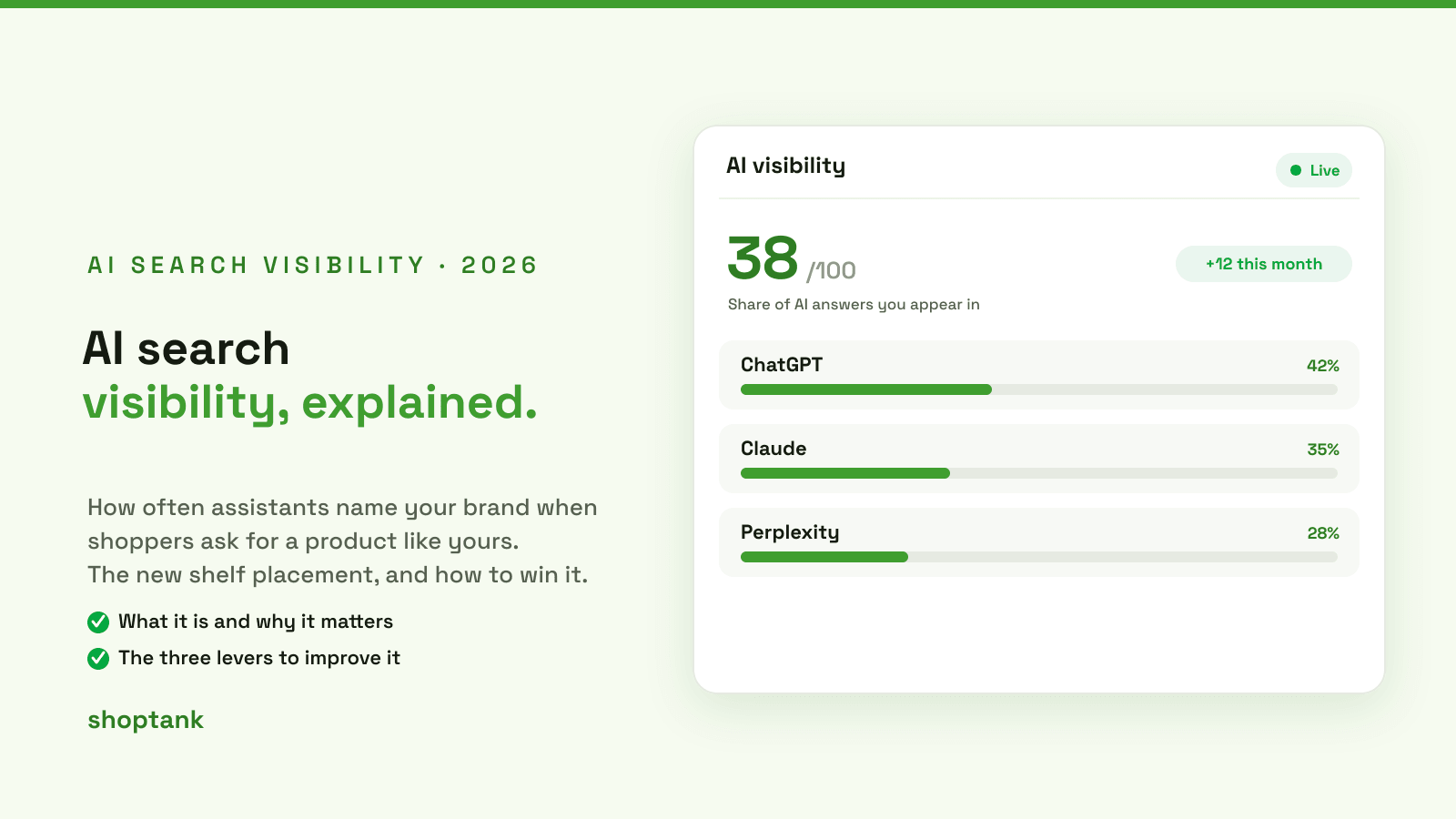
Shoppers used to start on Google. Increasingly they start by asking ChatGPT, Claude or Perplexity "what is the best [product] for [need]", and the assistant answers with a short list of brands. AI search visibility is simply this: how often your brand is one of those named. For an ecommerce brand it is becoming the new shelf placement, and like shelf placement, it can be measured and improved. Here is how.
Key takeaways
- AI search visibility is how often assistants name your brand when shoppers ask for a product like yours.
- It is not SEO. You are cited inside one written answer, not ranked in a list of links.
- You improve it with three levers: structure, authority, and presence, kept fresh.
- You cannot improve what you do not measure. Track your buyer queries across ChatGPT, Claude and Perplexity.
On this page
- What AI search visibility is
- Why it matters for ecommerce
- The three levers to improve it
- How to measure and track it
What AI search visibility is
AI search visibility is how often, and how prominently, your brand shows up when people ask an AI assistant for a recommendation. The assistant does not return a page of links. It writes one answer and names a few brands, chosen from the web sources it cites. Your visibility is your share of those answers: are you named, where in the list, and backed by which sources.
Why it matters for ecommerce
The buying journey now often has an AI step before the click. A shopper asks, gets three or four names, and researches only those. If your brand is not in that shortlist, you are invisible before the shopper ever reaches your site, no matter how good your ads or your storefront are. Being named is the new equivalent of being on the shelf at eye level. And because assistants lean heavily on third-party sources, a brand that never buys an ad can still win the recommendation by being well cited.
The three levers to improve it
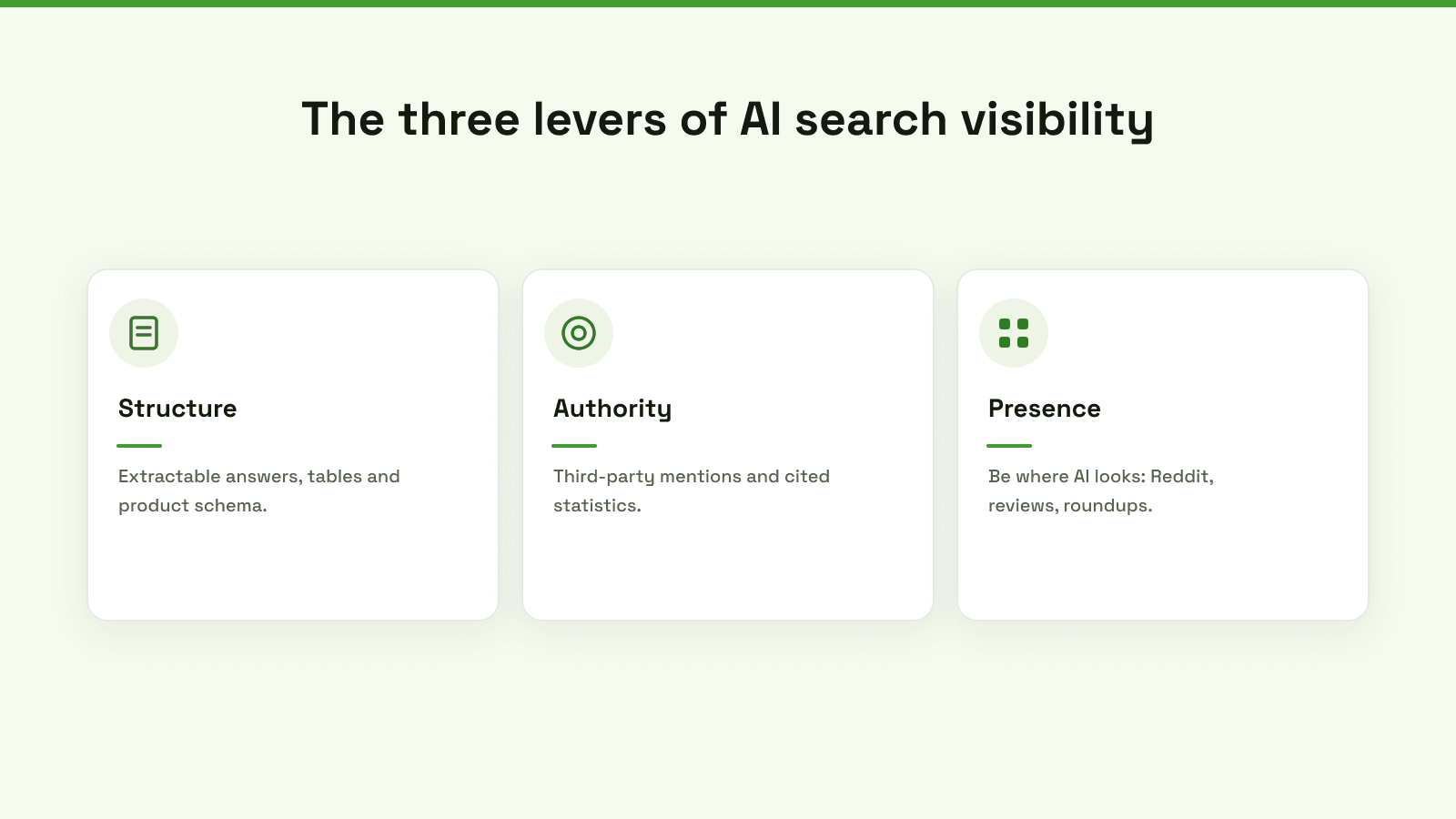
Improving AI search visibility comes down to three things, borrowed from how the models choose sources:
- Structure. Make your content extractable. Lead with direct answers, use comparison tables and specifications, and add product schema so agents can read your catalog cleanly.
- Authority. Earn third-party mentions and back your claims with specific numbers and citations. Brands are recommended far more often through other sites than their own, and pages with statistics get cited more.
- Presence. Be where AI looks: relevant Reddit and community threads, review sites, and editorial roundups. Then keep it all fresh, since recency is a strong signal.
For the tactical version of this, see how to get recommended by ChatGPT and AEO for ecommerce.
How to measure and track it
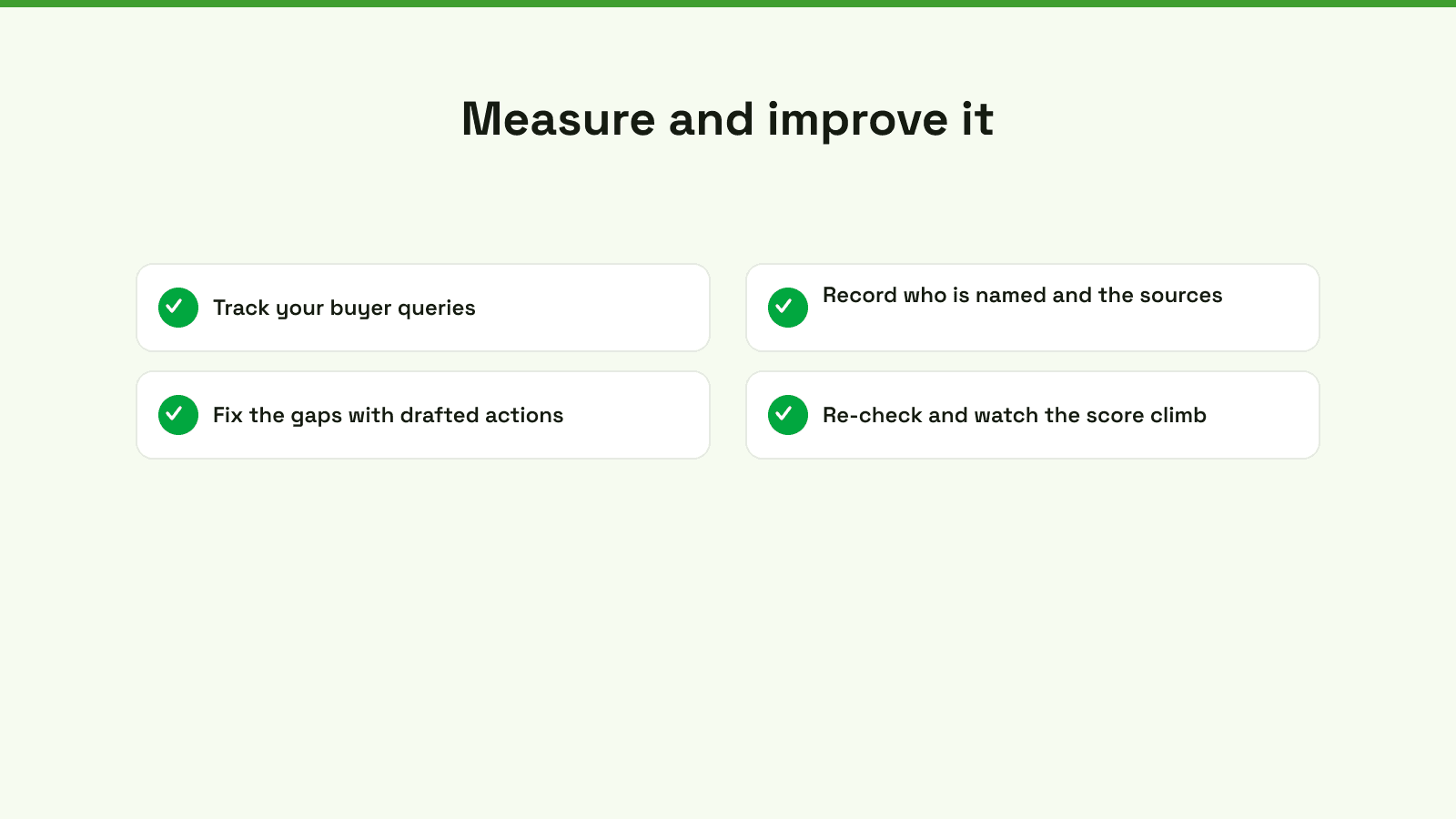
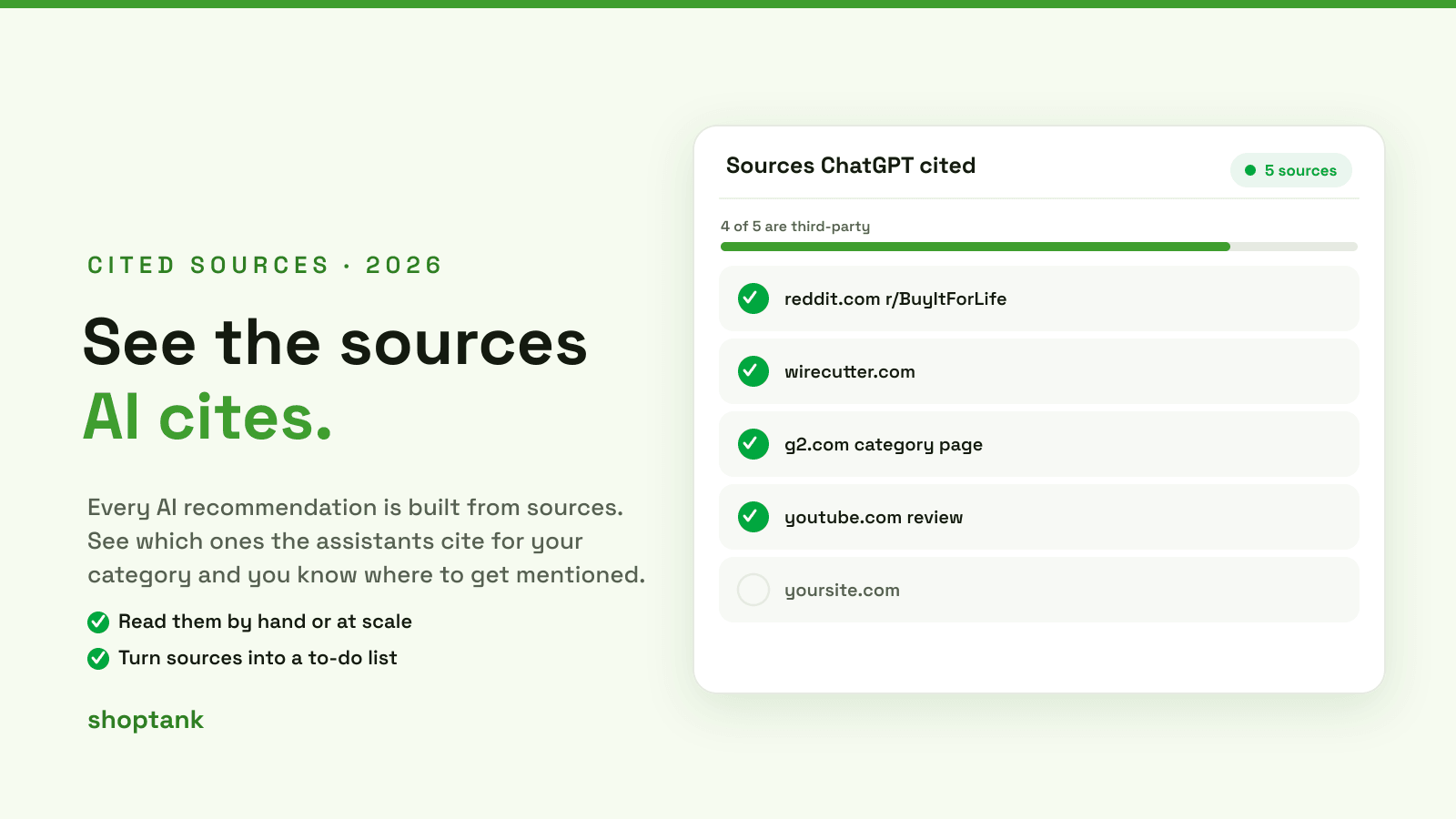
You cannot improve what you do not measure. Pick your buyer queries, run them across ChatGPT, Claude and Perplexity, and record how often you are named, in what position, and which sources drove it. That gives you a baseline score and, over time, shows what is working. Shoptank does this automatically for ChatGPT and Claude (Perplexity is on the roadmap): it tracks your queries, turns them into a visibility score, records the cited sources, and drafts the fixes for each gap. You can compare against competitors and watch the number climb.
See where you stand today. Run your first check free, compare tools in the best AEO tools roundup, or connect Shoptank to Claude and ask for your score in the chat.