AEO for Ecommerce: How Online Stores Get Cited by AI (2026)
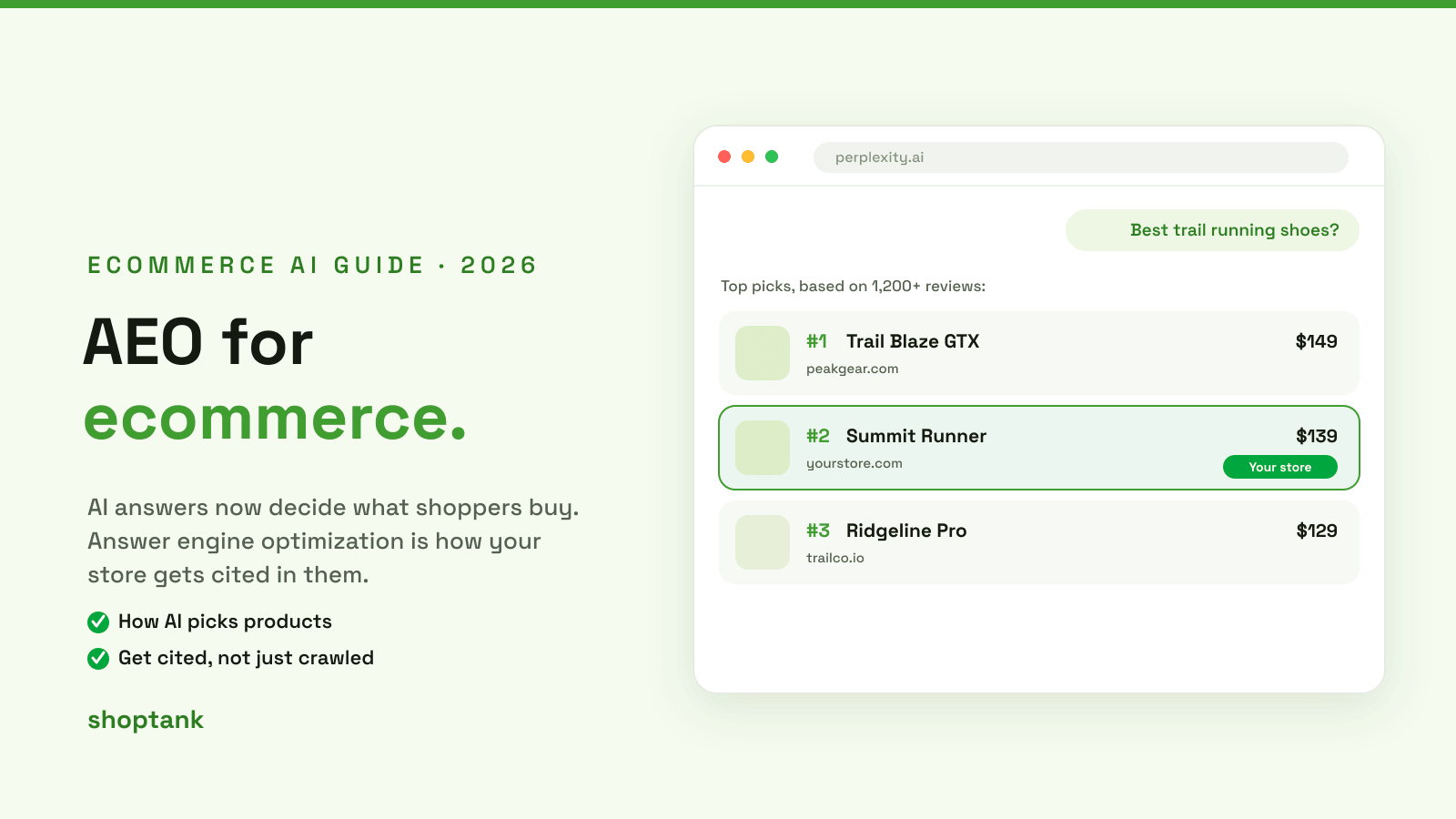
Answer engine optimization for ecommerce is the work of making your store easy for AI to understand, extract and cite. It matters because a growing share of shoppers now research purchases by asking an assistant instead of scrolling a search page, and the assistant answers with a short list of products and the stores behind them. If your store is not in that answer, the sale goes to one that is. Here is how AI answer engines actually pick products, and how to become one they cite.
Key takeaways
- AEO earns a place inside the AI answer, not a rank in a list of links.
- AI knows your store two ways: slow, fixed training data, and live retrieval you can actually move.
- Products get picked on structured data and trust signals, not marketing language.
- AI cites where it looks, so third-party presence matters as much as your own pages.
On this page
- What AEO for ecommerce means
- How AI answer engines work
- How to make products citable
- Be where AI looks
- Measure it
What AEO for ecommerce means
Traditional SEO earns your store a position in a list of links. AEO earns your store a place inside the single answer an AI writes, where there is no list to scroll and usually one recommendation that wins. The shift is from optimizing a page for a search engine to optimizing your content and data for an answer engine that reads, reasons, and cites.
For a store, that reframes the goal. You are no longer only chasing rank for a keyword. You are trying to be the store an assistant names when a shopper types a full sentence like best waterproof jacket for winter commuting. Those sentences, not keywords, are the real input now.
How AI answer engines work
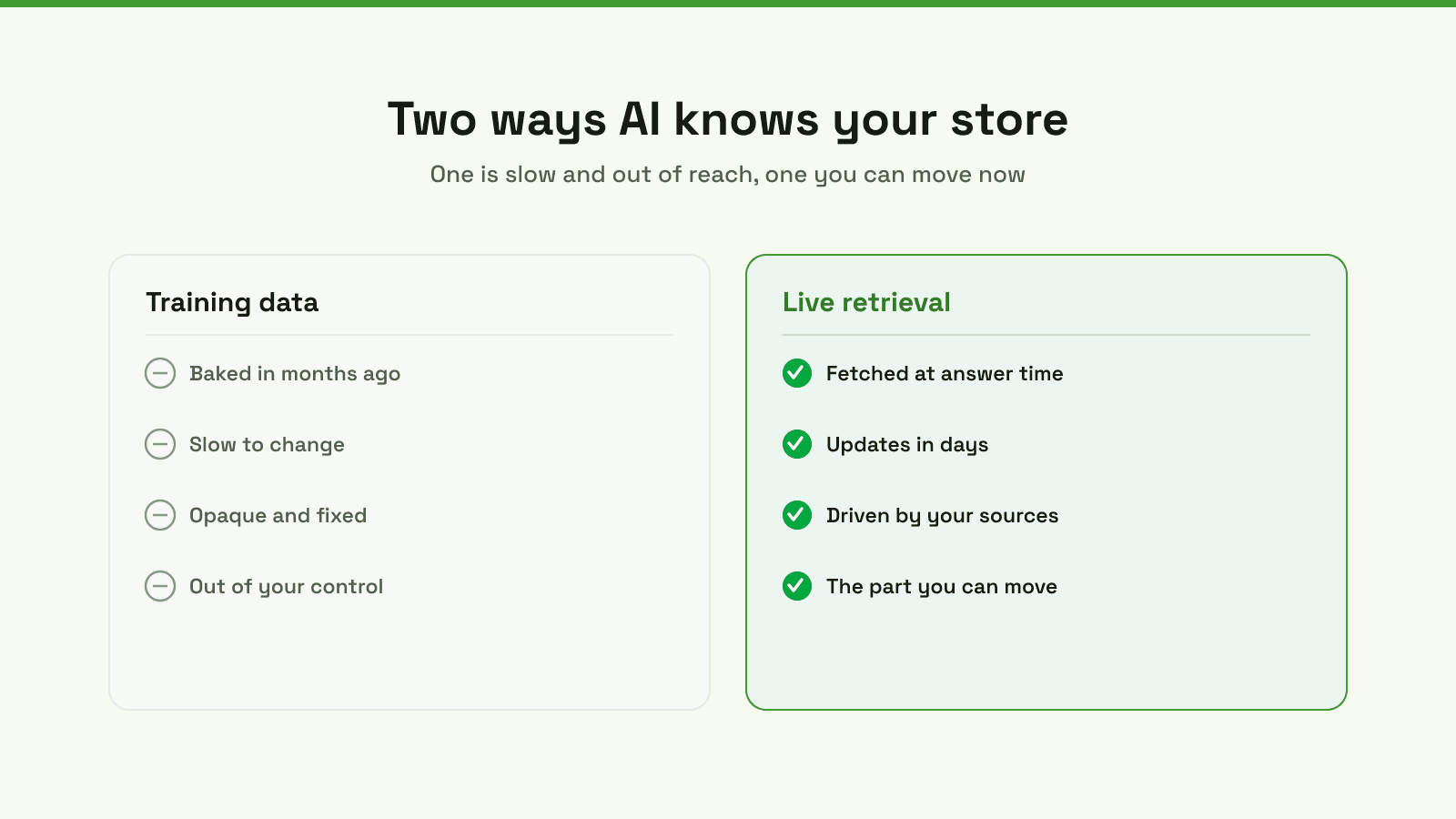
An AI answer engine knows your store in two ways, and the difference decides where you spend your effort. The first is training data, what the model learned months ago. It is slow to change, opaque, and outside your control. The second is retrieval, a live search the model runs at answer time to pull current sources before it writes. Retrieval is the part you can actually move, and it responds within days to weeks.
That is why AEO works on the retrieval path. You are not trying to retrain a model. You are making sure that when it runs a live search for a buying question, your store is among the sources it finds and trusts. The mechanics of that citation game are laid out in the Citation Loop.
How to make products citable
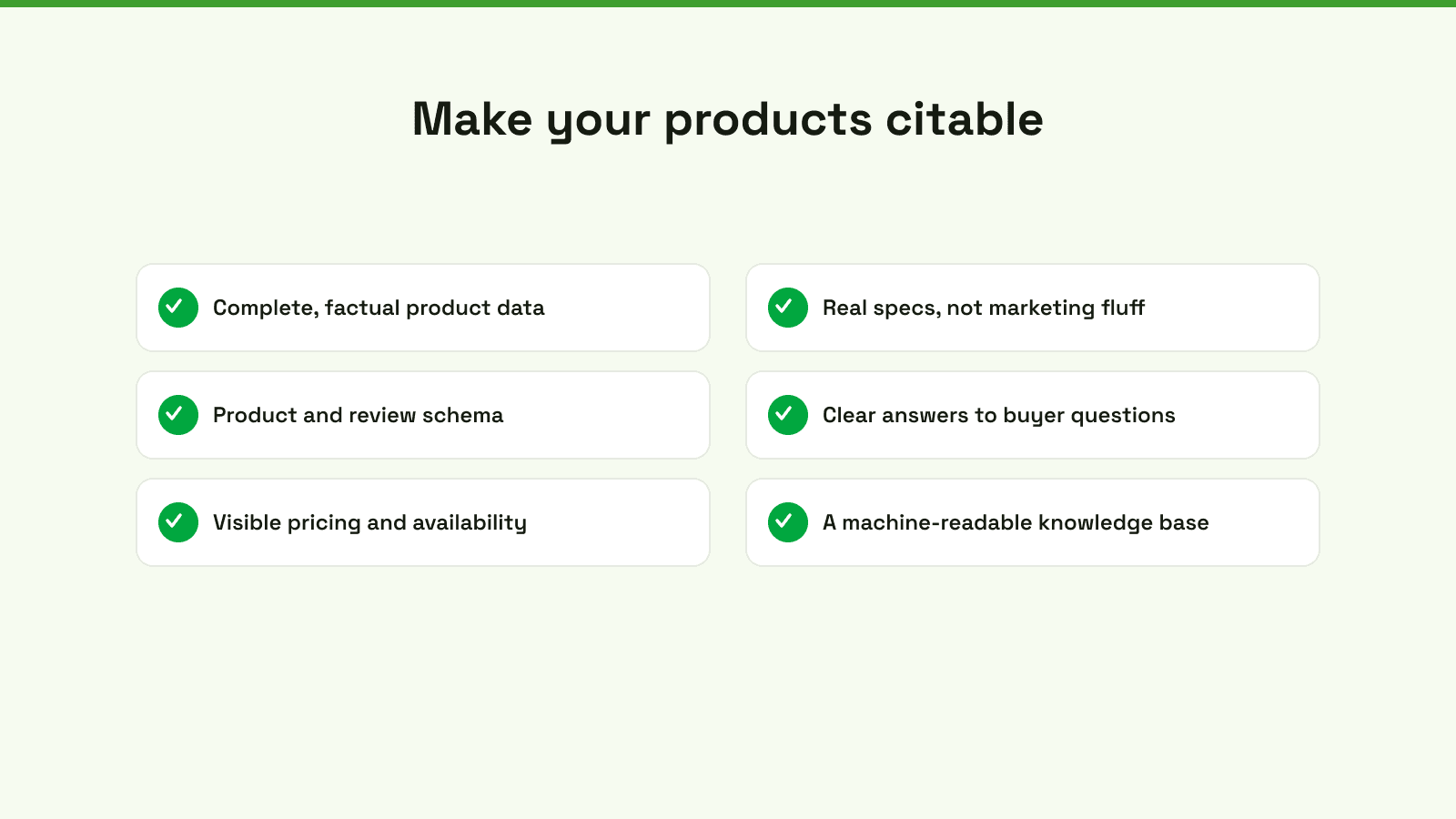
An engine can only cite a product it can read and trust. Making products citable comes down to a handful of concrete moves.
- Complete, factual product data. Real specs, materials, sizes and use cases, not adjectives. An engine matches facts to a query, so give it facts.
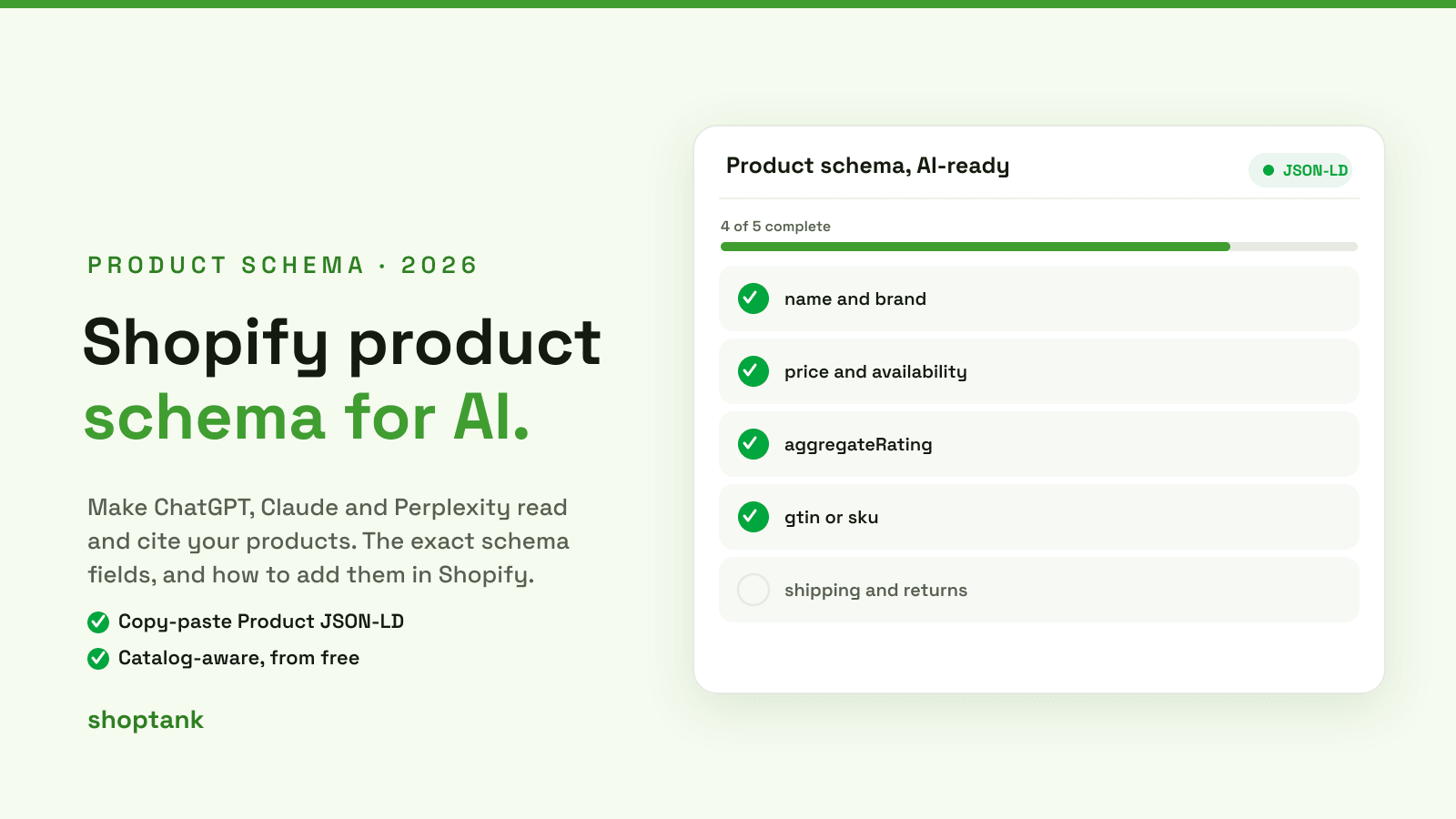
- Product and review schema. Structured data is how a machine reads price, availability, variants and ratings. See how to add schema markup.
- Visible pricing and availability. If price is locked behind JavaScript or a contact wall, an engine skips you for a store it can read.
- A machine-readable knowledge base. Publish buyer answers in a form assistants ingest, covered in the AI knowledge base guide.
Structure and specificity are the whole game here. Princeton's 2024 study of generative engines found that adding statistics and citing sources lifted a page's visibility by around 40 percent each, while keyword stuffing actively hurt it. Write for a reader who wants facts, and the engine follows.
Be where AI looks
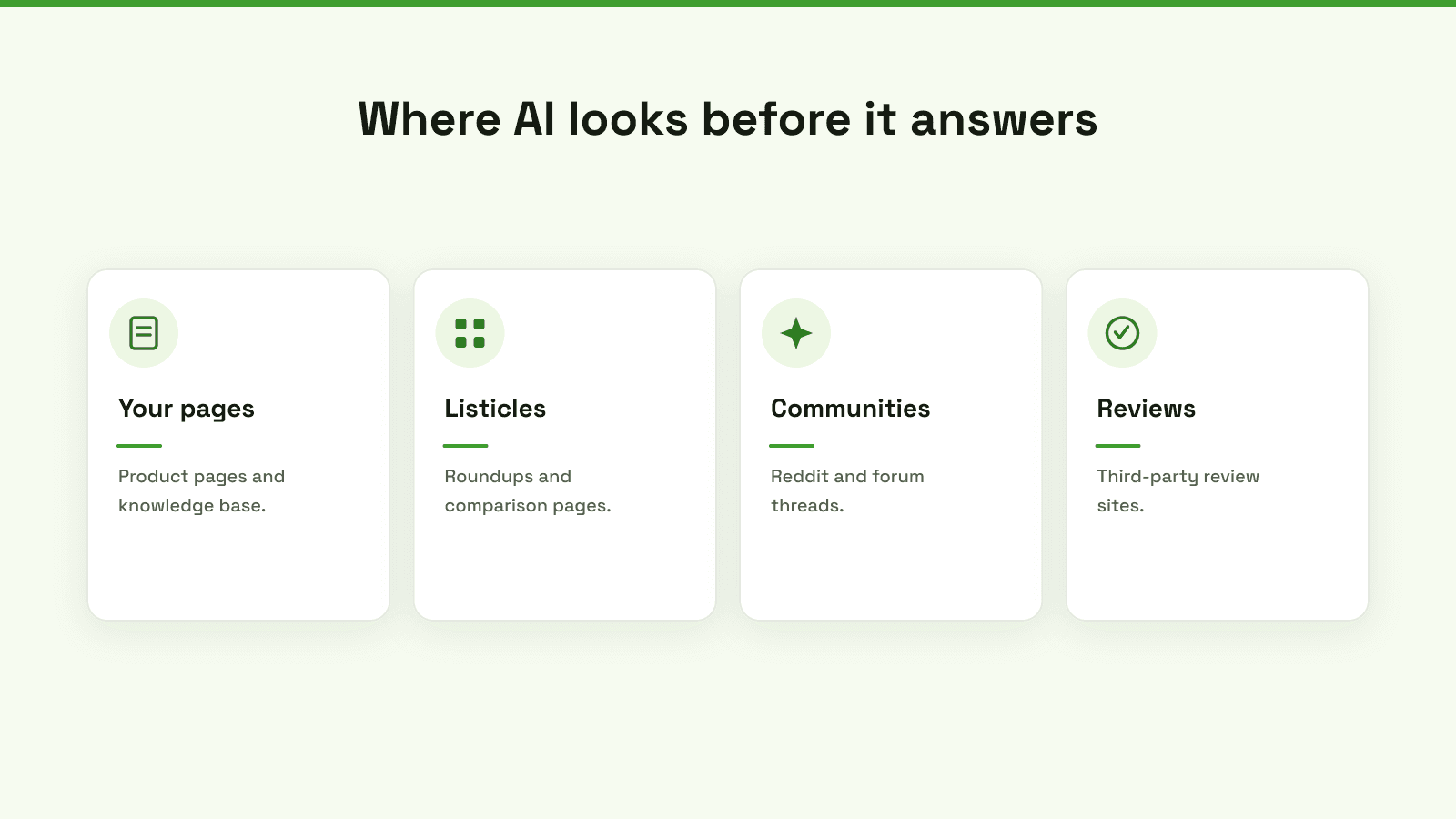
Here is the part most stores miss. AI does not only cite your website. It cites where you appear. When it runs a live search, it pulls listicles, comparison pages, community threads and review sites, and often those rank above a brand's own homepage as sources. A store is frequently more likely to be cited through a third party than from its own domain.
So AEO is partly off-site work: get added to the roundups an engine already cites, get mentioned honestly in the communities it reads, and earn reviews on the sites it trusts. Publishing great product pages is necessary, but presence on cited sources is what tips a mention into a recommendation.
Measure it
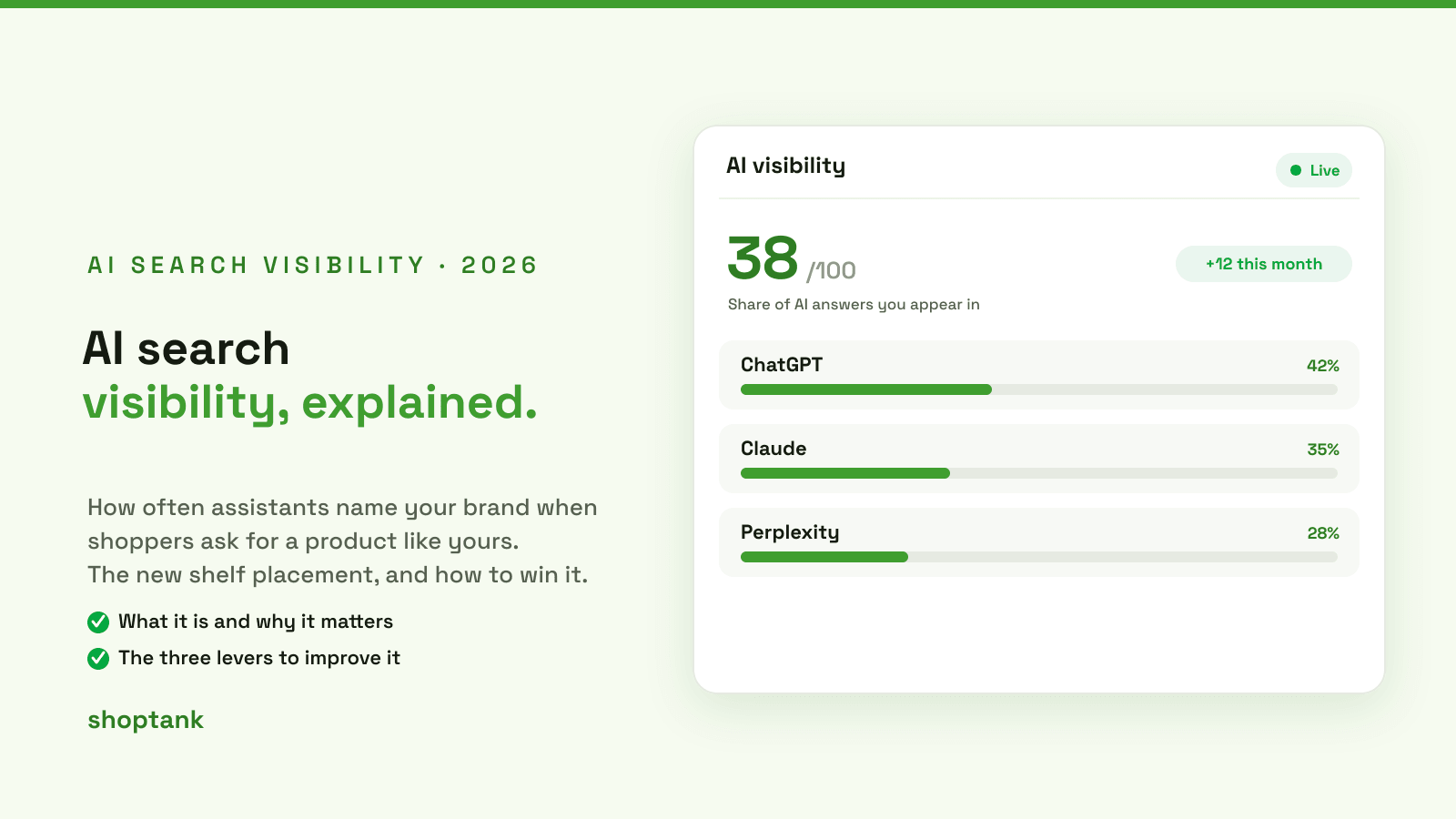
You cannot improve what you cannot see. Two measurements matter: referral traffic from AI domains in your analytics, and whether you are mentioned and cited for your real buyer queries across each engine. Shoptank runs the second for you. It tracks how your store ranks across ChatGPT and Claude, shows who wins the queries you lose, and drafts the fixes. It starts free. To go deeper, see AEO and GEO for Shopify, the AI visibility metrics that matter, and AI search for ecommerce.
AEO is not a rename of SEO. It is the work of being readable, trustworthy and present where AI looks, so the answer names your store. The stores that start now will own their categories in AI answers before their competitors notice the surface changed.