How to Do GEO for Your Shopify Store
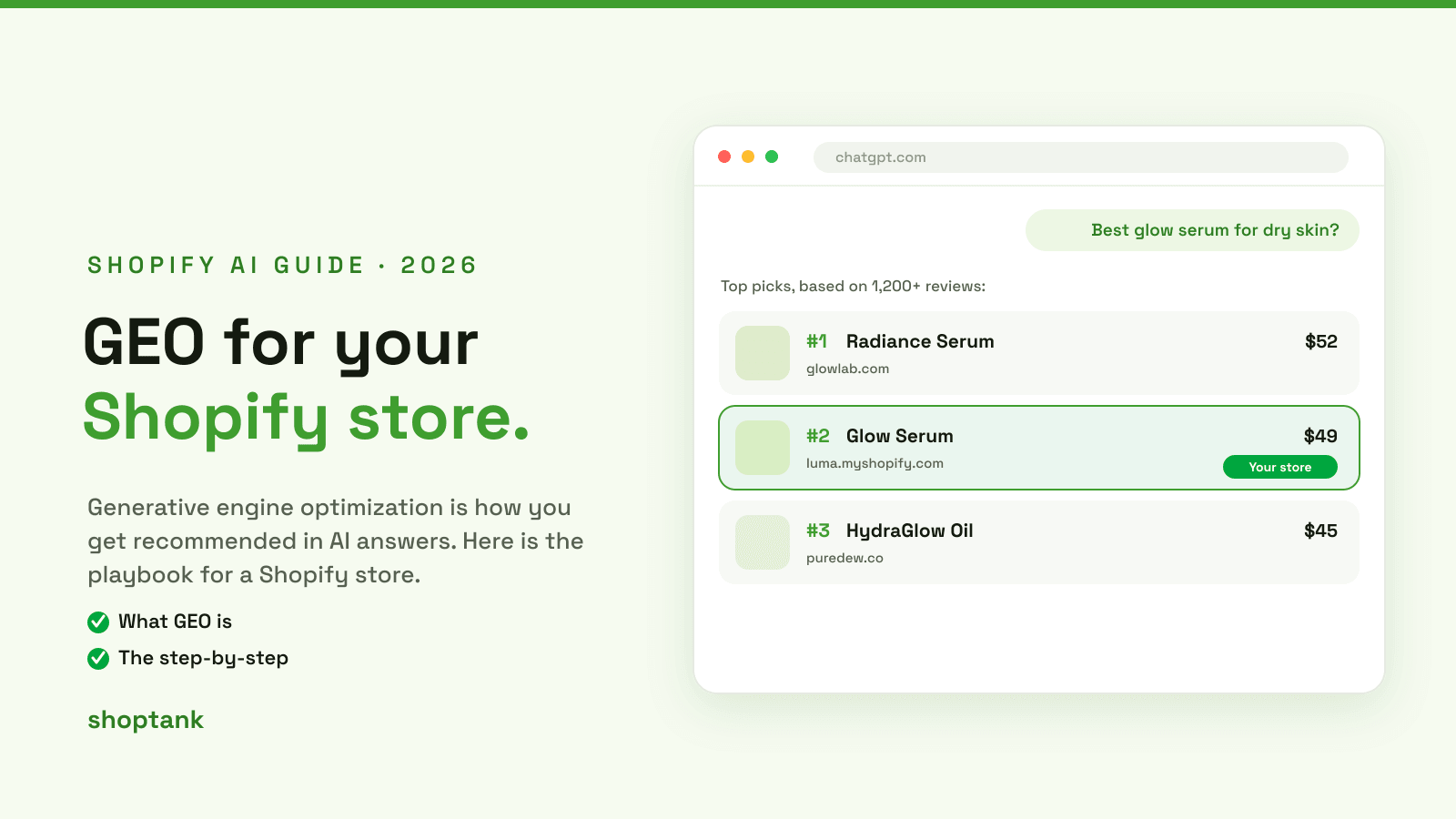
GEO, short for generative engine optimization, is the newest job in ecommerce marketing: getting your store recommended when a shopper asks an AI what to buy. When someone types best gift for a coffee lover into ChatGPT, the answer names a few stores. GEO is the work of making sure yours is one of them. Here is how to do it for a Shopify store.
Key takeaways
- GEO aims to be the store an AI answer names, not just a link in a list. It is the same idea as AEO.
- The playbook is concrete: syndicate, enrich your data, add schema, publish a knowledge base, earn citations.
- You cannot measure GEO by hand. Shoptank tracks your rank per query and per engine, from a free plan.
On this page
What GEO is
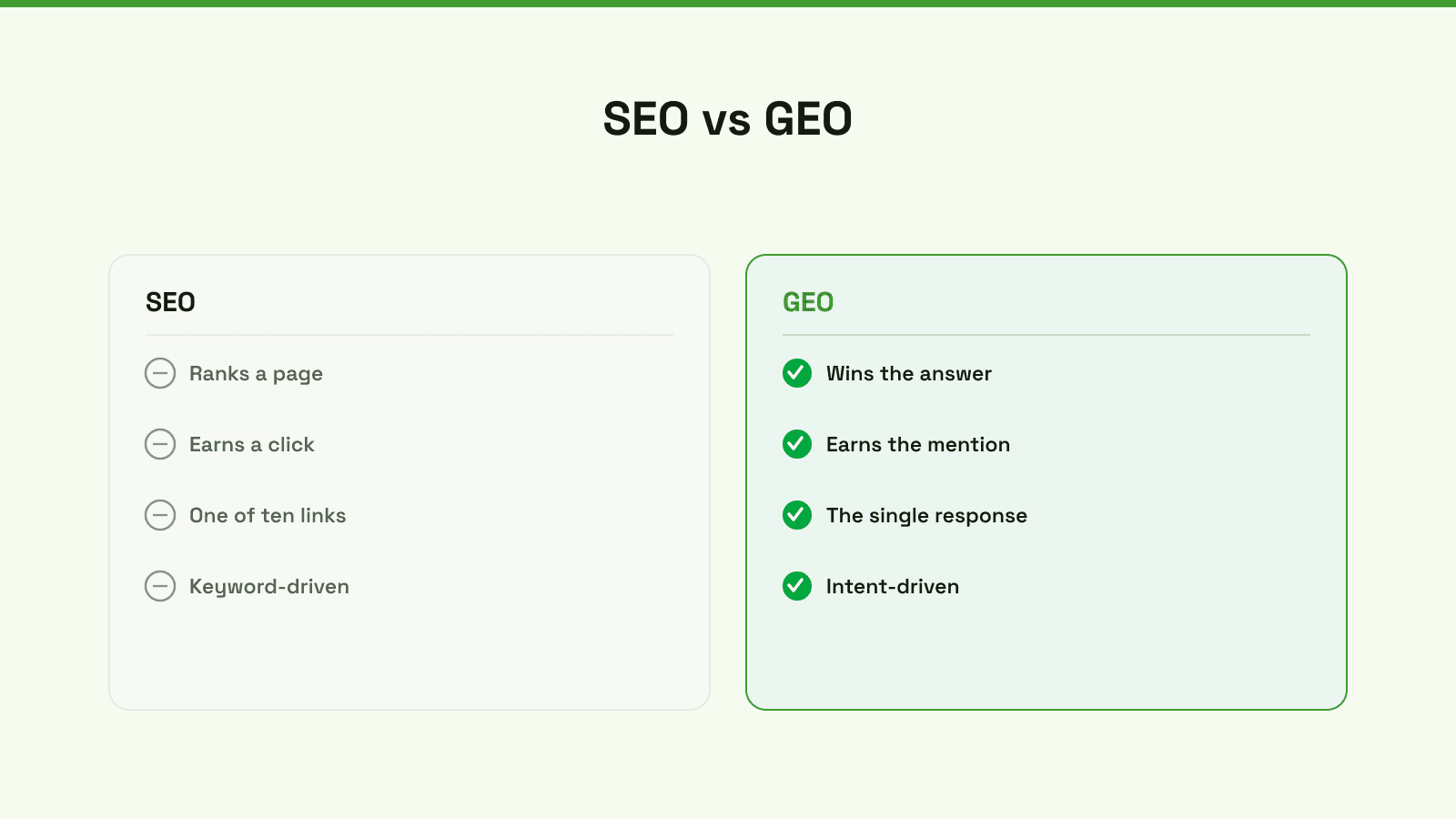
Generative engine optimization is optimizing for AI answers instead of search result pages. The difference from classic SEO is the shape of the result: SEO ranks a page in a list of ten links, and GEO tries to be the single store the assistant names.
You will also see the term AEO, for answer engine optimization. GEO and AEO mean the same thing in practice, so treat them as interchangeable. If you want the deeper explainer, see our guide to answer engine optimization.
The GEO playbook
GEO is not a mystery. It is a short list of concrete steps, worked in order.
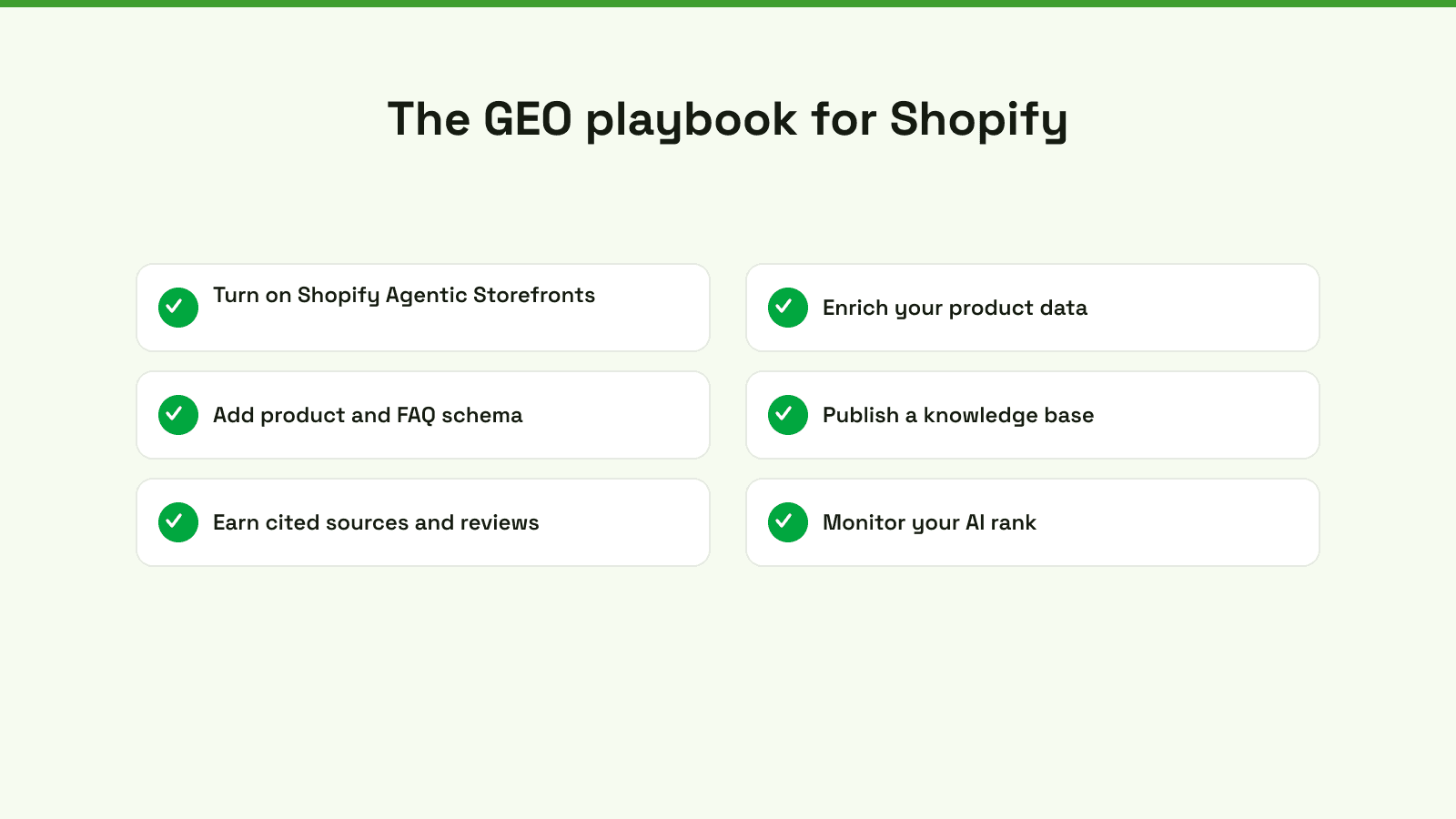
- Turn on Shopify Agentic Storefronts. Free and built in, it syndicates your products into the catalog AI shops from. Without it you cannot appear.
- Enrich your product data. Say clearly what each product is, who it is for, and the problem it solves, in plain shopper language.
- Add product and FAQ schema. Structured data tells assistants what your pages mean. See our guide to adding schema markup.
- Publish a knowledge base. Answer common buyer questions in the form assistants read, so the answer about you is the one you wrote.
- Earn cited sources and reviews. AI weighs what the wider web says about you. Work the sources that already rank for your queries.
- Monitor your rank. Track where you land so you know which steps are working.
How to measure it
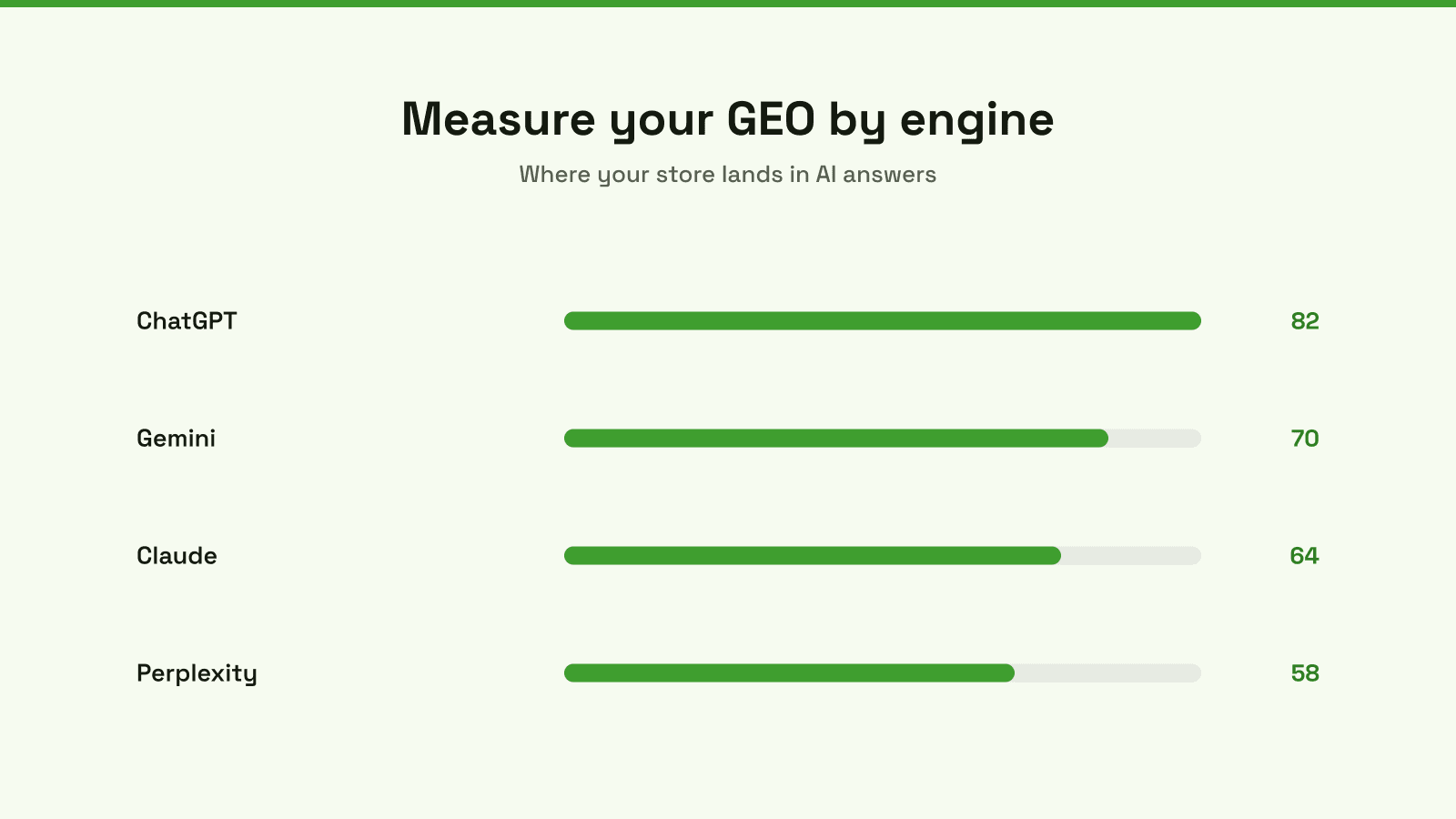
GEO only works if you can see it. Running every buyer query against every engine by hand is not realistic, so Shoptank does it for you. It records your position for each query, on each engine, and charts the trend, so a fix shows up as a query flipping from a competitor to you.
To track ChatGPT specifically, see how to track your rank in ChatGPT.
Where to go next
GEO is one half of getting found. For the full picture that pairs it with classic search, see our complete SEO and GEO guide for Shopify. To fix a store the assistants skip, see why ChatGPT skips a store, and to compare the tools, see the best AI visibility tools for Shopify.
The only way to know your GEO is working is to measure it. On Shopify, you can start free.